Posted in History

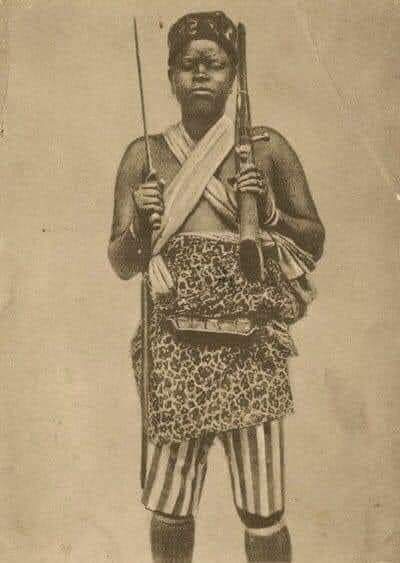
History of Mama Yakagbe(Ewe female warrior)

The Ewe female warrior. Mama Yakagbe stood shoulder to shoulder with the great warriors of Anlo State.

They were outside on a cool evening. She could hear the sounds of waves of the Atlantic Ocean. She looked over to the left and caught a glimpse of the vast beach.

She turned slightly to the right to view the lagoon on the other side. She was ready to protect this land between the Ocean and the Lagoon.

Her forefathers had given up so much. She suddenly woke up from her daydream.

The warriors were still discussing the issues at stake. There was a war to fight. She was ready. She had several tools in her magic bag. She had spoken with several people and collected a lot of data. She knows that she needed to draw a histogram. The issues at stake had to be prioritized in order of frequency. “The Pareto analysis would be an excellent tool to use,” she thought to herself. The 80/20 rule chart would help identify and prioritize the problem areas.

According to the Project Management Institute (2018), “The format of a Pareto diagram helps demonstrate the 80/20 principle whereby 80% of problems can be related to 20% of the causes”. (p. 69). She knew it was also essential to identify the vital few contributors that account for most of the problems. She knew that using Pareto analysis will help her show the other warriors a visual of how 80 percent of problems are due to 20 percent of causes. The variables described by the histogram would show the order by frequency of occurrence.

The year was 1866, and it was the Datsutagba or Gbedzidzavu war still playing out in front of her. She had fought side by side with the gallant male warriors of Anlo State. It was sunset, and she was still standing. She was proud she had made data collection a priority, and that it had paid off. Today, Mama Yakagbe’s stool is at “Atokor and is regarded as one of the most powerful stools of Anlo” (Agbotadua, 2016, p. 34)!
Source:Gnews.com/Kofi Tutu

Posted in History

History:The History of Dreadlocks!

The history of dreadlocks is varied and differs depending on who you ask. This, then, is a summary and compilation of all the different accounts that has been able to locate.

AROUND 3600 BC…
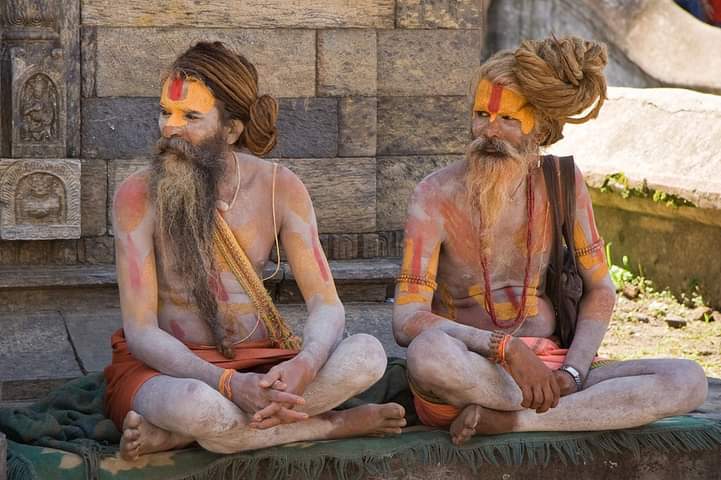
One account claims that dreadlocks originated in India (unlike most who cite Egypt as their birth place) with the dreadlocked diety Shiva and his followers. It is likely that this is the spirituality origin of dreadlocks in Indian culture.

In 1500 BC…
However, the first archaeological proof of people wearing dreadlocks came from Egypt where mummies have been recovered with their dreadlocks still in tact.

Regardless of their origin, dreadlocks have been worn by nearly every culture at some point in time or another.
Roman accounts stated that the Celts wore their hair ‘like snakes’. The Germanic tribes and Vikings were also known to wear their hair in dreadlocks.


Dreadlocks have been worn by the monks of the Ethiopian Orthodox Tewahedo Church, the Nazarites of Judiasm, Qalandri’s Sufi’s, the Sadhu’s of Hinduism, and the Dervishes of Islam, and many more!
There are even strong suggestions that many early Christians wore dreadlocks; most notably Sampson who was said to have seven locks of hair which gave him his inhuman strength.

The belief that dreadlocks gave a person power is not unique to this Bible story. Many believed that energy (presumably life force energy, chi, prana, ki, etc.) exits the body through the top of the head and that having knotted hair prevents or retards the escape of energy making one stronger and even potentially imbuing a person with supernatural mental and physical abilities. In many cultures it was and is common for shamans in particular to wear dreadlocks.

Dreadlocks have also symbolized the recognition and demonstration that our physical appearances and vanity are unimportant. Another, similar practice is having a shaved head with no hair at all. Others still believe that dreadlocks are the most natural and healthy style of hair to have as hair will dread if left to its own devices.

At the beginning of the Industrial Revolution The Rastafari Movement began gaining popularity among the Black Jamaican population. The Rastafari draws their beliefs from three main sources; the Old Testament, African tribal culture, and Hindu tribal culture. Before it got the name ‘Rastafari’ its followers called themselves ‘dreads’, signifying their ‘dread’ and respect for God.

In an attempt to emulate the Nazarites and Hindu holymen their beliefs were modeled after, they began to wear their hair in matted styles and this is when the term ‘dreadlocks’ came into common use. The Rastafari Movement began to draw attention when in the 1930’s Ras Tafari was crowned the emperor of Ethiopia. He was forced into exile and many vowed not to cut their hair until he was released.

TO BE CONTINUED…

Posted in General News, History

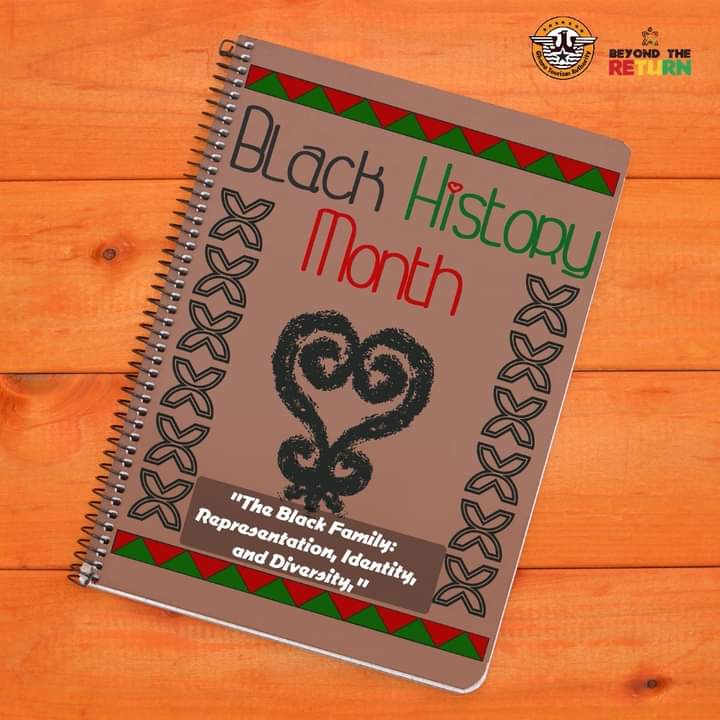
Black History Month

Today marks the begining of Black History Month, celebrated every February in the United States, Canada and other parts of the world.

The theme for this year’s commemoration is “The Black Family: Representation, Identity, and Diversity.”

This theme fits well into our 10-year Beyond the Return campaign which also highlights the Black Family’s importance and diversity irrespective of location be it African, American, Caribbean, Black Canadian, or from the continent of Africa. We are all a global family.

Join us as we take you through the story of the “Black Race and its struggles over the years to 2021. We will be sharing the history, stories, creativity and beauty of the black people.

BlackHistoryMonth #BHM2021 #BHM #BlackHistoryMonthBTR #BlackHistoryBTR #BlackHistory #SankofaBlackHistory #BlackHistorySankofa #mondaymotivation

Posted in History

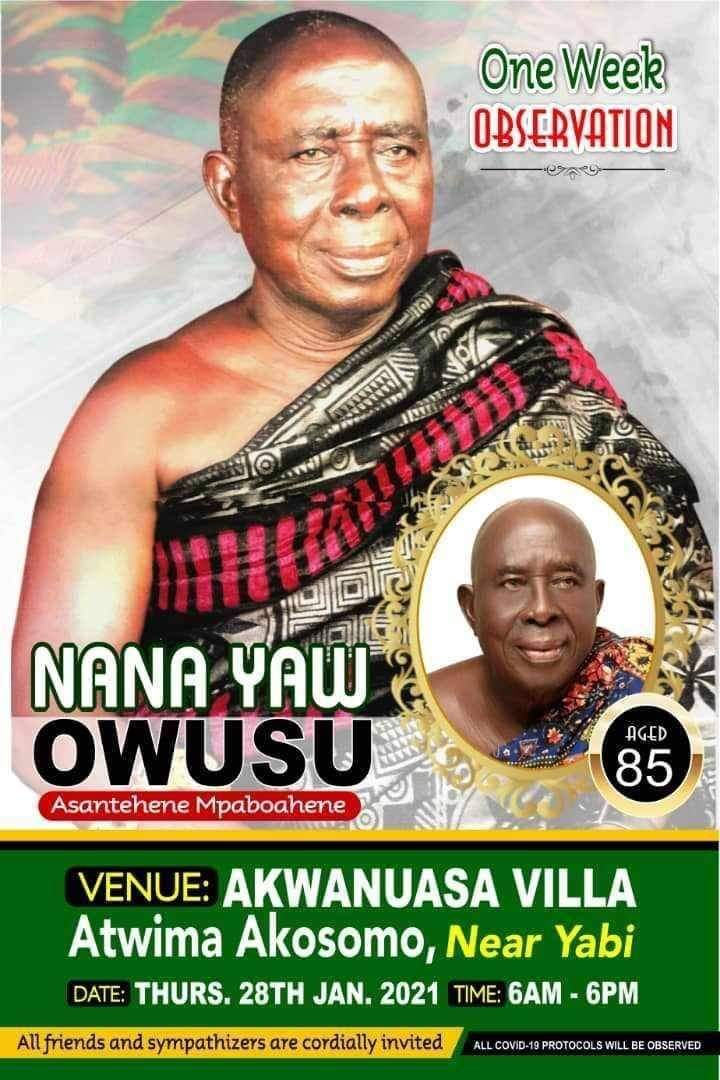
History of Otumfour Mpaboahene

The mpaboahene of Asantehene has a black stool. He swears to the Asantehene
with the Ahwehwebaa sword. The Ahwehwebaa sword is a sword of less
significance than the Mpomponsuo sword. It is a stool of matrilineal desendent.

This stool was created by King Osei Tutu, Opimsuo,'” It is said io have been
created before the Derkyira war with Ntim Gyakari.
The main duties of the mpaboahene are as follows: The Mpaboahene is responsiblefor
the safe-keeping of the Golden Sandals of Asantehene. He is responsible for
putting the sandals on the Kings feet.
He is responsible for the keeping of MpaboaKessie
the great, sandals. It is said that the Mpaboa Kessie
contain medicine and are worn by the King on special occasions such as war
time, business meeting of the
state.

He is responsible for all the various sandals of Asantehene, e.g golden
sandals, silver sandals, etc.
It is said that the golden sandals of Asantehene are
worn on festive ocecasions and when going to Akrafieso
(plate of ancestral worship). The silver sandals are also worn at the discretion of
the King. It is said
that they can be worn when going to the place of worship
or just at normal.

The first chief of this stool was called Gyeabuor. He went to the Denkyira war at
Fehyiase, where Ntim Gyakari, the Denkyira chief, was defeated and decapitated
by the Asantes.

Gyeabuor was succeededon the stool by Beresah. He was a brother of chief
Gyeabuor. He went to the Takyiman war in which Ameyaw, the
Tachimanhene, was defeated and beheaded by the Asante during the reign of
King Opoku Ware, Asantehene.
He also went to the Gyaman war, in the reign of
Asantehene Opoku Ware, in which Abo Kofi, the Gyamanhene, was defeated and
decapitated by the Asantes. He was on the stool in the reign of Kusi Bodum
Chief Beresah, was succeeded on the stool during the reign of Nana Osei
Kwadwo by Asare.
He went to the Banda war where Worosa, the ohief of
Banda, was captured and beheaded by the Asante Asare as a brother of
Beresah.

Asare was succeeded on the stool by his nephew, Gyeabuor. It is said that
Gyeabuor ll was on the stool during the reign of Nana Osei Asibe Bonsu,
Asantehene. Gyeabuor ll went to the Fanti war where at Anomabu the King,
Osei Bonsu Panin alias 0sei Tutu Kwame for the first time in the annals of
Asante history placed the state sword into the sea, winning the traditional
appellation of “Bonsu”, meaning the destroyer of the sea”. Gyeabuor ll also went to the Gyaman war where Adinkra was captured and beheaded by the
Asante.
Gyeabuor ll was succeeded on the stool by Gyeabuor III.
It is
said that he was a brother of his predecessor Gyeabuor I.
The history will continue during the final funeral rite.

Source: The Kingdom of Asante