
Posted in General News

Ban On Social Gatherings Does Not Include Marriage Ceremonies – Oppong-Nkrumah

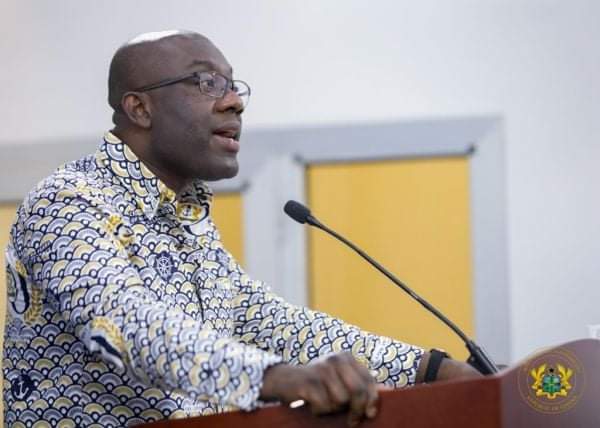
The Minister-designate for Information, Mr. Kojo Oppong-Nkrumah, has explained that the reintroduction of a ban on social restrictions as announced by President Akufo-Addo last Sunday, does not include the ban on marriage ceremonies.

Rather, he says the social activity of parties and/or receptions associated with occasions such as funerals and marriage ceremonies is what has been banned.

Consequently, he says, marriage ceremonies, which are held in the churches, and mosques where there is strict adherence to COVID-19 protocols can go on.

Mr. Oppong-Nkrumah gave the clarification on Tuesday at a press briefing on the government’s COVID-19 response in the country.

Ban reintroduced

President Akufo-Addo last Sunday reintroduced a ban on all social events, including weddings, funerals, and other social events as part of interventions to halt the surge of the Coronavirus in the country.

The directive, according to the President, was based on data, which suggests that the surge in cases was as a result of non-adherence to preventive protocols at such social gatherings.

Confusion

The President’s announcement has however triggered discussions among some sections of the public.

Some have questioned why religious gatherings under strict protocols as prescribed and for two hours have been allowed but events such as funerals and weddings have been banned.

Clarification

Throwing more light on the President’s directive, Mr. Oppong-Nkrumah explained that “the President did not say that marriages are banned.”

Likewise, he said burial services were allowed but with a limited number of 25 persons at the ceremony.

“The president did not ban burial service because the activity of burial, we actually encourage to go on… What is banned in the funeral where typically in the Ghanaian community we will all gather, shake hands, announcement of people, then they’ll call for a song, people will come and dance, where there is a little party associated with it. That is what has been banned,” he explained.

“In the same way, when it comes to marriage, what the president has said is that, what in Ghana we call wedding, the full-blown wedding where we have a big party with a reception and people dancing and people eating, sitting at reception tables, etc, that is what has been banned,” he added.

“We’ve got a lot of requests about so what if somebody is having a church service, which is allowed, and they choose to bless their marriage there as part of the church service. I’m not sure that is what has been banned. It’s the wedding. The full-blown wedding with its reception and social activity associated with it is what has been banned,” Mr Oppong-Nkrumah explained further.

Case update

The Director-General of the Ghana Health Service (GHS), Dr. Patrick Kuma-Aboagye noted that as at January 30, 2021, Ghana had recorded 5,515 active cases, 424 deaths and 61,843 discharges or clinical recoveries.

He also noted that the Greater Accra Region accounted for 56.7 percent of total cases, while the Ashanti and Western Regions accounted for 16.0 and 6.1 percent of cases respectively.

He added that 294 persons who had tested positive for COVID-19 were on admission, with 34 being critical, 122 being severe and 138 being mild to moderate cases.

Soure: Graphiconline.com
Posted in General News

COVID-19: Ban all social gatherings now – OccupyGhana to gov’t

Pressure group OccupyGhana has called on the government to immediately ban all social gatherings in the country due to the increasing numbers of COVID-19 cases.

According to the group, the ban is important to slow the spread of covid-19 across the country.

“The factor(s) driving these unfortunate changes are not letting up, and unless something drastic is done, the situation will get worse. These factors leading to the uptrend are visible to most Ghanaians.

“After almost a year of dealing with this disease, we have all learned the role social gatherings play in spreading. We therefore ask the government to immediately ban all social gatherings till a marked drop in new cases is seen.”

Ghana has now recorded over 3500 active cases with the death toll currently at 361. The country is currently recording almost 600 cases on a daily basis.

Find below the full statement

25th JANUARY 2021

OCCUPYGHANA® PRESS STATEMENT

UPTICK IN NEW COVID-19 CASES AND DEATH – GHANA NEEDS TO ACT AND ACT FAST

The Medical Team of OccupyGhana® has been studying graphs plotting new cases of COVID-19 against time, and sees a relative period of quiescence from late August through much of October 2020.

In the first week of November, though, there was a noticeable spike in new cases that let up about two weeks later. A similar phenomenon was evident as we entered December. Though new cases were more than what was seen in September and October, the growth rate stayed stable.

However, January 2021 has seen a significant uptick in new cases and death. These changes are not letting up three weeks into the month. The uptrends in new cases and deaths are noticeable and more significant this time than back in November and December 2020.

OccupyGhana® therefore states as follows:

1. The factor(s) driving these unfortunate changes are not letting up, and unless something drastic is done, the situation will get worse. These factors leading to the uptrend are visible to most Ghanaians. After almost a year of dealing with this disease, we have all learned the role social gatherings play in spreading. We therefore ask the government to immediately ban all social gatherings till a marked drop in new cases is seen. This will include funerals, parties, church services, night clubs etc. In short, any gathering of more than ten people should be banned again.

2. Unfortunately, a ban might affect the recent and pending re-opening of schools. It will therefore be imperative to explore expanding online classes, whether class sizes of those who cannot take online classes could be reduced to a maximum of ten, and shift systems introduced. For parents who must go to work, it is time for employers to begin conversations on ‘flexitime,’ which breaks the day into three 8-hour cycles where parents could stay at home to supervise online classes and then report to work later in the day. We must do whatever it takes to rein in this trend of infections, and it requires us to be creative in how we think and how we do things.

3. It is our view that the experience from last year showed that a general lockdown is not sustainable. A better alternative, we think, would be to identify and target the hotspots and at-risk groups and explore ways to modify their behaviour. It is unfortunately evident that the social behaviour of those in the middle class is driving this new uptick in cases and deaths. All efforts should be made to influence this behaviour and reverse this trend.

4. Enforcing the mask mandate is also very important. Masks have been shown to break the spread. We must enforce the terms of the Imposition of Restrictions Act, 2020 (Act 1012). However, we think that the punishments in the Act have hardly been applied. This is because although the prescribed fine of between GHS12,000 and GHS60,000 and/or imprisonment between 4 and 10 years might have been well-intentioned to be draconian and convey the seriousness of the situation, they have proven to be unrealistic. Parliament has to consider an amendment of the Act in this light, to aid its enforcement and to provide for realistic fines and other deterrents such as community service for those who breach the law.

5. In the general public, there are still many misconceptions about the disease. Re-educating the public about the disease, the myriad ways it can present and its short and long-term effects should be an exercise our media houses can help with. We are inviting electronic media houses to commit to air approved educational advertisements on the pandemic for a minimum cumulative period of one hour in every 24-hour cycle, over the next month. Print media houses may also commit to print one full-page advert three times a week.

6. Another factor leading to the uptrend is the new variants of SARS-CoV-2, the virus responsible for COVID-19. Consideration should be given to reducing travel to and from countries where these variants are dominant.

7. We also ask the government to make more hospital beds available as all indications point to a dire need for beds for the ever-increasing number of new cases that need in-patient care.

8. Ultimately, the best way out of the chokehold of this pandemic is a vaccine. Therefore, we implore the government to spare no effort in getting doses of a COVID-19 vaccine for the country.

9. To all Ghanaians, even if you are one of those who will only get a mild case of COVID-19, the toll those who suffer the severe version exact on the health facilities ultimately lead to a situation where help for non-COVID conditions become very difficult or even impossible to obtain. The indirect effects of the disease and a rampant spread are many. Therefore, it behoves us all to work to stop the uptrend in cases.

In conclusion, it is essential for all to recognise the direness of the situation and act accordingly.

Source: Starrfm.com.gh