Posted in General News, History

Rawlings’ speech while on trial after his failed coup on 15th May, 1979

“Now you listen to me well and good because I am not here to make a speech and I am not here to waste my time talking. First and foremost, let me inform you that I am not here to impose myself on 10 million citizens of this country. But I am telling you that, I am here today in the history of this country to address myself to military senior officers, all those politicians, all those businessmen and foreign criminals who have used our blood, sweat and tears- the tools of our labouring- to enrich themselves, to drown in wine and women, while you and I, while the majority of us, are daily struggling for survival, yes!

I know what it feels like going to bed with a headache for want of food in the stomach. I am not an expert in Economics and I am not an expert in Law but I am an expert in working on an empty stomach while wondering when and where the nest meal will come from.

Let me tell you, the struggling and suffering masses, just one little warning. Should anyone or group of you dare collaborate or help exploiting pigs to run away, this country will once more bleed than we anticipated.

I am going to prove to you today that it is no longer a question of the military against the civilians, it is no longer a question of the Akan against the Ewe, the Ga against the Northerner. But a question of those who have against those who have not, a question of a vast majority of hungry people against a very tiny minority of greedy, inhumane, selfish senior officers, politicians, businessmen and their bank managers and a bunch of cowardly Lebanese who will not stay in their country to fight for a cause. But who is a fool? You and I.

You and I are the bigger fool for allowing such a blatant abuse of human dignity for so long. 22 years after independence, you and I are still hitting our heads on the ground and leaving it all to God to save us one day. Where on this earth had God come to the salvation of a people without the suffering, starving, hungry people taking the law into their own hands!

America has seen her brand of revolution, France has seen her brand of revolution, Britain has seen her brand of revolution , Russia, China, Iran, all of them. Only the black man in the black African continent goes on leading his fellow black men like a herd of cattle while suppressing them like slaves. Let me tell you today that God will not help you, and the big men will not help you because his stomach is full, his children’s stomachs are full and there is enough for them to go and come as they like. Only you can help yourself.”

iLoveGhana 🇬🇭

Source: Kojo Yankah, The trial of J. J. Rawlings, pp. 42-44.

Posted in History

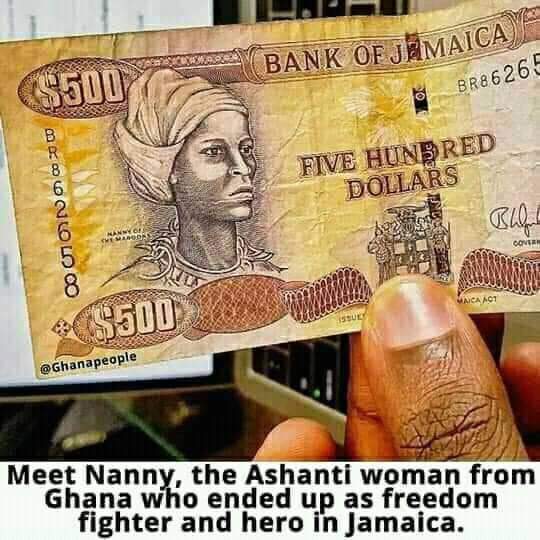
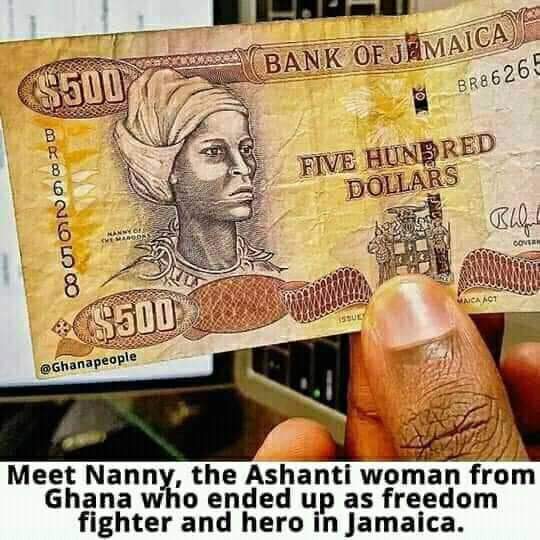
The Ashanti woman who ended up as freedom fighter and hero in Jamaica.

The Ashanti woman who ended up as freedom fighter and hero in Jamaica.

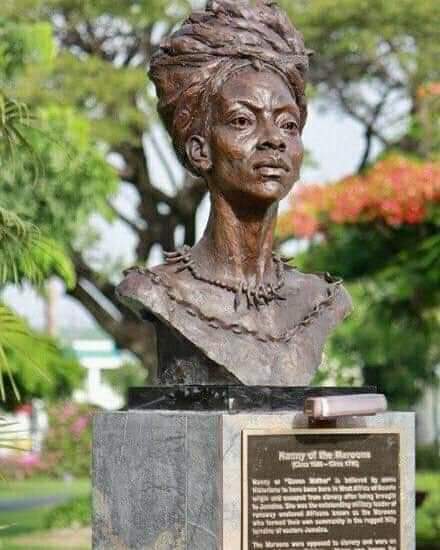
This statue is located in Emancipation Park, New Kingston, Jamaica🇯🇲.

Queen Nanny (Nana) of the Maroons.

She was a former slave stolen from the Ashanti Tribe brought to Jamaica during the late 1700s. Maroons were escaped slaves who formed their own independent settlements. Her and her 4 Brothers who were Maroon leaders escaped their plantation and hide in the mountains and jungles in Jamaica.

They created a village in the Blue Mountains where they took slaves after they raided numerous plantations.

Nanny is credited to freeing over 1,000 slaves. Maroon in Latin means wolf. The Spanish called these free slaves “Maroons,” a word derived from “Cimarron,” which means “fierce”

“Anywhere Asante goes, it will shine” – Komfo Anokye.

Anywhere we step our feet at, our presence must be felt by all. We were born freedom fighters. The kind of spirit our ancestors placed in us, only the “Sikadwa Kofi” can tell. It is a resilient spirit.

Black Power, Salute the Queen.

Piawwwwwww!!!

Credit: African Full Facts.

Posted in History

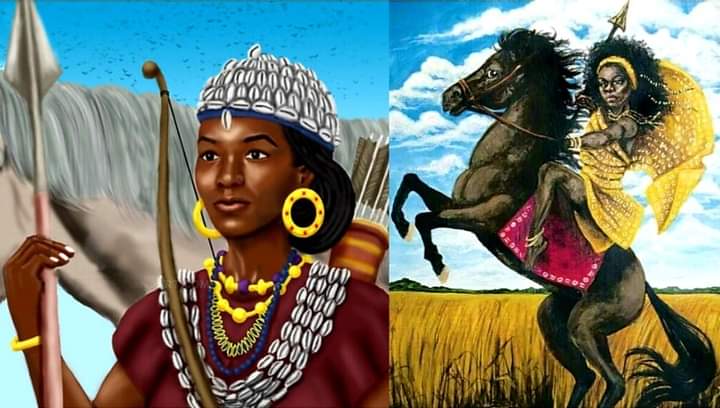
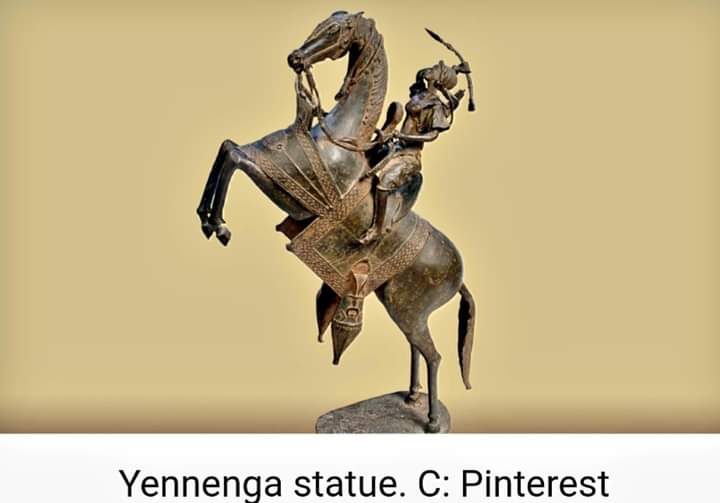
Yennenga,Dagomba warrior Princess whose son founded Mossi Kingdom in west Africa

Princess Yennenga is seen as the mother of the Mossi culture, and many statues and memorial marks of her can be seen in Ouagadougou, the capital of Burkina Faso. Parallels can be drawn between Princess Yennenga and heroines in various other cultures, for example Jean D’Arc and Athena.


Many versions exist of the 14th century legend of Yennenga. This is one of them.


King Nedegea of West Africa reigned over a wealthy kingdom. He had a young and lovely daughter, too. A cherished princess. She was permitted to lead her own troops because she was courageous and exceptionally skillful with spear and bow, as well as a better rider than both her brothers and many of the king’s warriors. She was already helping her dad battle the enemy who was attempting to steal the king’s riches at the age of 14.


Since the abilities of Yennenga were so great and therefore of the utmost importance to the kingdom, her father would not allow her to marry.


She planted a field to make it clear to her father that she was not able to abstain from family life, although she did not harvest it, but let it go to waste instead. She explained that she was feeling this way.


Instead of softening the attempts of Yennenga to justify her feelings, her father grew furious and decided to lock her up.


Yennenga had several friends among her father’s guards, as she was a beloved princess. One of her father’s horsemen helped her flee, dressed up as a man, on horseback. They rode through the night together, but were attacked by the enemy. Her helper had to pay with his life.


Yennenga rode on northwards alone.
One night, when she and her horse were tired, they saw a house after crossing a turbulent river. Riale, the hunter of elephants, lived in that home. He saw through Yennenga’s veil immediately and fell in love.

The couple had a son called Ouedrago, meaning stallion, because it was Yennenga’s horse that brought her to Riale and to love. In Burkina Faso, which is located where the Mossi kingdom is still strong in West Africa, Ouedraogo is a popular surname to date.


Yennenga symbolizes much that is of great importance even today, in West Africa as well as in the rest of the world.

Yennenga was young, beautiful and loved by her people and her father. She had both beauty and skill.


Yennenga symbolizes much that is of great significance even today, in West Africa as well as in the rest of the world. Yennenga was young, she was beautiful being loved by her people and her father. She had beauty along with skill.


Yennenga embraced the roles of gender and she was allowed to develop her talents. She was of great importance to the security and development of her country.

Yennenga was brave and had the strength of a powerful will. In her life decisions, she pursued dialogue, behaved decisively, and was motivated.

Credit: Yennenga Progress
Source: The African History.

Posted in History

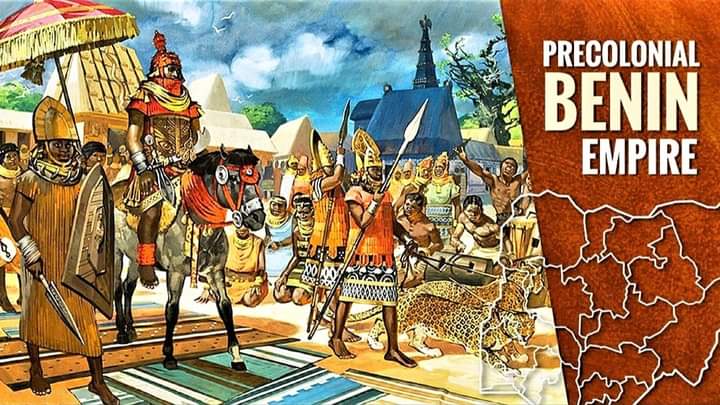
How the city of Benin was looted and burnt to the ground by British soldiers

Kingdom of Benin was one of the strongest and most prosperous kingdoms in history known. From the beginning of the 15th century to the early 17th century, the progress of this kingdom was very clear. Benin was a beautiful city, apart from influence and prosperity, particularly the residence of the leaders.

At that time, the people of Benin produced palm oil and rubber that they traded with some Europeans. During that time, the British, who were very powerful, decided to use their power to take over the kingdom and get rich by selling their rubber and palm oil and disseminating their influence as well.


They sent their officials on many occasions to pay a visit to the kingdom to create a trade relationship, but the leaders denied them access because at the moment they knew of the British power’s dealings. The British sent another set of delegates to the kingdom again in 1897, who were driven away.

There were brutal assaults in the heat of the encounter between the Benin warriors and the British leaders, who were seriously warned of their unwelcome visits.


Some Benin warriors, including the British, lost their lives. This made the officials in Britain furious. In return, over a thousand troops were sent, invading the kingdom, burning it to the ground and looting the city.

Afterwards, Benin City was captured and made part of the British Empire until it was liberated in 1960.

Source: EyeGambia | BBC

Posted in History

Chieftaincy Can’t Be Abolished! Part I

LET US get down to basics. Otumfuo Osei Tutu II has never put himself or Asanteman above the laws of Ghana.

What the occupant of the Golden Stool did at the meeting of the Asanteman Council the other day, was merely to draw the attention of the state to a very serious lapse with far reaching ramifications on the peace and tranquility of the entire nation.

By failing to respond to the news of the kidnapping of Tuobodomhene Nana Baffour Asare II, the state of Ghana was putting everybody at risk.

Otumfuo merely asked the state to do the right thing before some hot-headed youths, seeking revenge on behalf of the Tuobodomhene, took the law into their own hands.

That is why it is unfortunate that some people have chosen not to appreciate the volatile nature of the issue at stake but rather berate the Asantehene. Some anarchists are even calling for the abolition of chieftaincy as an institution in this land of our birth.

Trust Ghanaians to feed fat on people’s distress calls. But this wanton attack on the occupant of the Golden Stool is plain mischief.  “Father forgive them, for they know not what they are doing”, my apologies to the Founder of Christianity.

It appears subtle but the ramifications are wider. The return of the Umbrella to Government House seems to be fuelling a culture of intolerance directed against the Akans, especially those tracing their ancestral home to the magic of Okomfo Anokye and the royal tutelage of Osei Tutu I.

There appears to have been so much anti-Asante cancerous growth in the minds of some Ghanaians that rational thinking appears to have taken leave of them when discussing issues with Asante anecdotes.

How on this earth should chieftaincy be abolished in a country deep-seated in that tradition? Who, by the way, would carry out the abolition?

Chieftaincy is our way of life and that is duly recognized by Article 270 of the law of the land – the 1992 Constitution. It is the structure that supports our lives as Ghanaians. In Akan societies especially, everybody is an Odehye with a clan stool.

Anybody who does not belong to a clan cannot in all fairness be an Akan.

Long before the advent of the colonial exploiters, chiefs determined how the society was run. They led the people in migration, fought wars when necessary in defence of the society and generally laid down policy guidelines.

In Fanti folklore, Oburumankoma, Odapagyan and Oson, who led the Fantis to migrate from Techiman to their recent home around Mankessim, were all chiefs.

When the British colonial powers took over the administration of the then Gold Coast, they found the chieftaincy institution so engrained in our lives that they chose to administer the society through our chiefs in what came to be known as indirect rule.

Even Osagyefo Dr. Kwame Nkrumah, with all his radical ideas, never attempted to abolish chieftaincy. Rather, he used chiefs to achieve his objectives.

Without a Vice-President or a Prime Minister, ex-President Nkrumah left the administration of Ghana in the hands of Presidential Commissions led by chiefs anytime he traveled outside the country.

When he went on his ill-fated trip to Hanoi in February 1966, the Presidential Commission that administered Ghana was headed by Nana Akyin VI, then Omanhen of the Ekumfi Traditional Area.

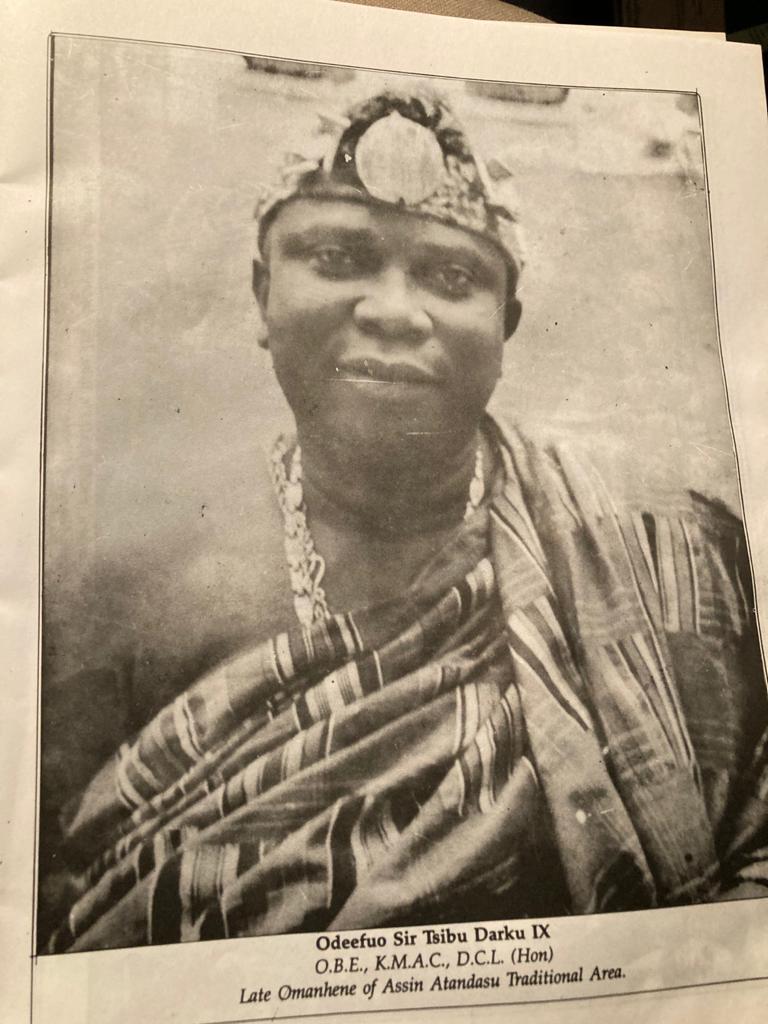
Remember Nana Sir Tsibu Darko? He was Omanhene of the Assin Attandasu Traditional Area when Dr. Nkrumah was the political head of the Ghanaian nation. Nana played several roles in the administration of the Convention People’s Party.

It is a fact of life that some chiefs were destooled by the machinations of the Nkrumah regime. Okyehene Ofori-Atta II, for instance, was banished to Accra on the orders of the first President of the Republic of Ghana.

But an incident such as what happened to the Okyeman had more to do with political undertones than disagreements over traditional authority.

If people choose not to relate to their chiefs, probably because they do not visit their ancestral homes, that is their own business.

They cannot impose their thinking on the whole nation. Chiefs are the very embodiments of our tradition.  

For the 10 years that Otumfuo Osei Tutu II has occupied the Golden Stool, he has transformed Asanteman with a touch of genius and impacted positively on the entire nation.

The Otumfuo Education Fund, for instance, has aided the growth of education in Asanteman and other parts of society. There are other initiatives on health, culture and many other issues of significance to the whole nation.

I am not an Asante. But the role of Asante chiefs in shaping their spheres of influence should lend itself to emulation by some of us in non-Asante societies in Ghana.

If we cannot match them, we should not condemn them.

When Prempeh I was brought back from exile in Seychelles, the British colonial masters built what is now the museum at Manhyia as residence for the king.

But the Asantehene refused to occupy it until Asanteman had paid every penny the British spent on the building and its furnishing.  

The lesson in the ex-Asantehene’s posture is that Asanteman and every Asante must inculcate the habit of self-reliance in him. It is this drive that has made Asanteman and its people, perhaps, the most endowed in the Ghanaian society.

I hope that those who advise on state policy from beclouded tribal spectacles would put aside their hatred for Asanteman and provide the needed guidelines for harnessing a harmonious society.

The other day, when I heard Oseadeyo Akumfi Ameyaw, the Techimanhene, on whose authority the Tuobodom chief was abducted and allegedly tortured at the Techimahene’s Palace before being handed over to the police, spewing venom against the Asantehene, I asked myself; where is this society heading to?

Referring to the captured chief as if he had never sat on a stool, belied the Techimanhene’s believe in chieftaincy as an institution.

According to Otumfuo Opoku Ware II, the immediate past Asantehene, who addressed a press conference in September 1995 to put the record straight on why some chiefs in the Brong Ahafo Region, including Tuobodom, owe allegiance to the Golden Stool, the Techimanhene has gone to great lengths to try and claim some nasal states in the Brong Ahafo area from Asanteman without success.

“The Tano-Subin towns of Ofuman, Tuobodom, Tanoboase, Buoyem, Tanoso, Branam, Nchiraa and Subinso No.1 owed allegiance to the Golden Stool for nearly three hundred years.

In 1935, when the Asante confederacy was restored, a Committee of Privileges was established to examine the conflicting claims of various chiefs in the confederacy to the allegiance of stools and to the ownership of lands”, according to a press statement read by Otumfuo Opoku Ware.

According to the late Asantehene, “the Omanhene of Techiman presented a claim to the Committee of Privileges for the above mentioned towns in the Tano-Subin area and lost.

The committee thus confirmed the allegiance of these nine towns to the Golden Stool. Thereafter, the Techiman stool pursued its claims in various courts up to the Judicial Committee of the Privy Council and lost in each case.

In 1945, the Omanhene of Techiman made a last effort by way of petitioning King George VI in Council to reverse this decision. However considering the time honoured rights of the Asante, the Techimanhene’s petition was rejected once more”.  

The nine towns continued to owe allegiance to the Golden Stool even after the creation of Brong Ahafo Region in 1959.

In the words of the then Minister for Local Government, Aaron Ofori-Atta, “It is not the intention of the present bill (the act creating the Brong Ahafo Region) to disturb any allegiance which may be cut across by the new boundary.

“All stool lands in the Kumasi State, whether lying in the Ashanti Region proper or the new region, are administered by the Commissioner for lands as administration under the Ashanti Stool Lands Act. This bill involves no change in that arrangement”.

Since then, all commissions on chieftaincy have failed to alter that arrangement. The Techimanhene therefore was only being economical with the truth when he sought to bring Tuobodom under his jurisdiction.

By Ebo Quansah

Posted in History

Sir Nana Tsibu Darku IX Service to Assin Atandansu Traditional Area.

Sir Nana Tsibu Darku IX alias Ekow Anaisie, alias Nicholas Andrew deHeer, was born in Cape Coast on Thursday 19th March, 1902.

His father was the late Adrian Nicholas deHeer of the Vanderpuye Anona family of Elmina, and a one time wholesale keeper of F&A swanzy at Axim. He was also a customs officer at Cape Coast until failing eyesight forced him to retire. He died in 1934.

His mother, the late Madam Efua Takyiwah, of the Assinie Royal family, Assin Atandansu, lived in cape coast. She traded in ”Aggrey” beads, often traveling between cape coast and Obuasi in Ashanti and thus become known as â€ťNana Obuasi”. She was born in 1898 and died in 1964. Sir Tsibu was the third and last child.

Because of their mother’s frequent travels, their grandmother, Madam Nana Efua Sam, looked after them.

A frequent visitor to cape coast was their uncle, Nana Tsibu Mensah, Omanhene of Assin Atandansu Traditional Area. The far- seeing uncle, sent Sir Tsibu in 1908 to join his brother at the A. M. E. Zion School. When Sir Tsibu left Senior School in 1918 he entered S. P. G. Grammar School( Now Adisadel College) in 1919 and left in 1923 after passing the Cambridge junior school certificate Examinations.

He worked in the junior Division of the Political Administration as secretary to Mr. A. F. E. Fieldgate who was then the District commissioner, cape coast and they used to go on trek together in the cape coast district. In this way, Nana picked up a lot of his knowledge of British administration. The Assin stool family elders had opportunity to assess Sir Tsibu more than his elder brother. They used to bring all their problems to Sir Tsibu first before going to see the D.C or other officials.

Nana Tsibu Mensah abdicated in 1927 and went to live in cape coast. Later he left for Assin Nkran where he died in 1929.

The stool family put on the stool in 1927 a young teenager, Mr. Kweku Monney son of the Queen Mother of the Eku royal stool house and made one Mr. Bobie, the Gyasehene as Regent. This brought about so much dissention within the traditional area that the young chief abdicated in June 1930 and left to continue his education at S. P. G Grammar School. It was decided by the stool elders to take an older person as Omanhene and Sir Tsibu, who hailed from the Gyemfuah royal stool house, was unanimously selected and enstooled in October, 1930.

Nana’s primary concerns after his enstoolment were the Health and Educational facilities for the people.

He established the first native Authority Dispensaries at Fante Nyankumasi in 1936. A Maternity Clinic was added in 1939. The clinic is now a Health Centre. He was very instrumental in getting the Roman Catholic Church to establish the Catholic Hospital at Assin Foso and in getting successive government to recognise and support the Hospital.

He keen interest and leadership in promoting public health activities led to the digging of wells in all the towns and villages of Assin. This helped suppress the guinea- worm disease and the people of Ayaase sent a delegation to thank Sir Tsibu for delivering them from this pestilence.

There were only four schools in the whole Assin Area in the 1930s, namely the Methodist school at Assin Foso, the Methodist school at Assin Edubiase 8 miles away, the Methodist school at Assin Manso capital of Assin Apimanim Traditional area, and the catholic school at Assin Darmang. Sir Tsibu started the first Native authority school at Fante Nyankumasi in 1935 and subsequently during the second word war many towns and villages had their own primary schools.

More soon….

Source: Gnews.com/ Kofi Tutu

Posted in History

The missing wrist watch

A young man saw his primary school teacher at a wedding ceremony. He went to greet him with all respect and admiration!!

He said to him:
“Can you still recognize me Sir?’

‘I don’t think so!!’, said the Teacher, ‘could you please remind me how we met?’

The student recounted:
“I was your Student in the 3rd Grade, I stole a Wrist watch belonging to my then classmate because it was unique and fascinating.

My Classmate came to you crying that his Wrist Watch had been stolen and you ordered all Students in the class to stand on a straight line, facing the wall with our hands up and our eyes closed so you could check our pockets.

At this point, I became jittery and terrified of the outcome of the search. The shame I will face after other Students discovered that I stole the Watch, the opinions my Teachers will form about me, the thought of being named a ‘ thief’ till I leave the School and my Parents’ reaction when they get to know about my action.

All these thoughts flowing across my heart, when suddenly it was my turn to be checked. I felt your hand slipped into my pocket and you brought out the Watch. I was gripped with fear, expecting the worse to be announced. I was surprised I didn’t hear anything, but Sir, you continued searching other Students’ pockets till you got to the last person.

When the search was over, you asked us to open our eyes and sit on our Chairs. I was afraid to sit because I was thinking you will call me out soon after everyone was seated.

But to my amazement, you showed the watch to the class, gave it to the owner and you never mentioned the name of the one who stole the watch. You didn’t say a word to me, and you never mentioned the story to anyone.

Throughout my stay in the school, no Teacher or Student knew what happened. This incident naturally taught me a great lesson and I resolved in my heart never to get myself involved in taking whatever is not mine.
I thought to myself, you saved my dignity.”

“Do you remember the story now Sir? You can’t simply forget this story Sir!!”

The teacher replied, ‘ I vividly remember the story that I found the Watch in a pocket but i did not know in whose pocket the stolen Watch was found that day because I searched your pockets while I also had my eyes closed.”

In life, we need wisdom for everything we do. As Parents, Teachers, Leaders etc… We should be able to close our eyes to some things. Not all misbehaviour require punishment. Some will need encouragement, some mentoring and some monitoring. Be a Leader who impacts, not one who shatters.

Copied