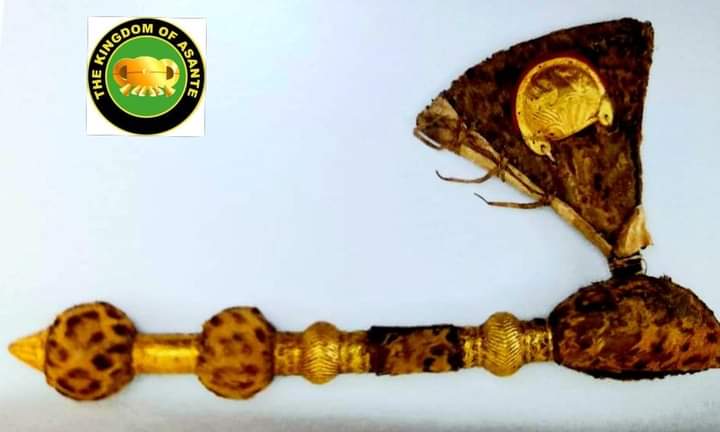
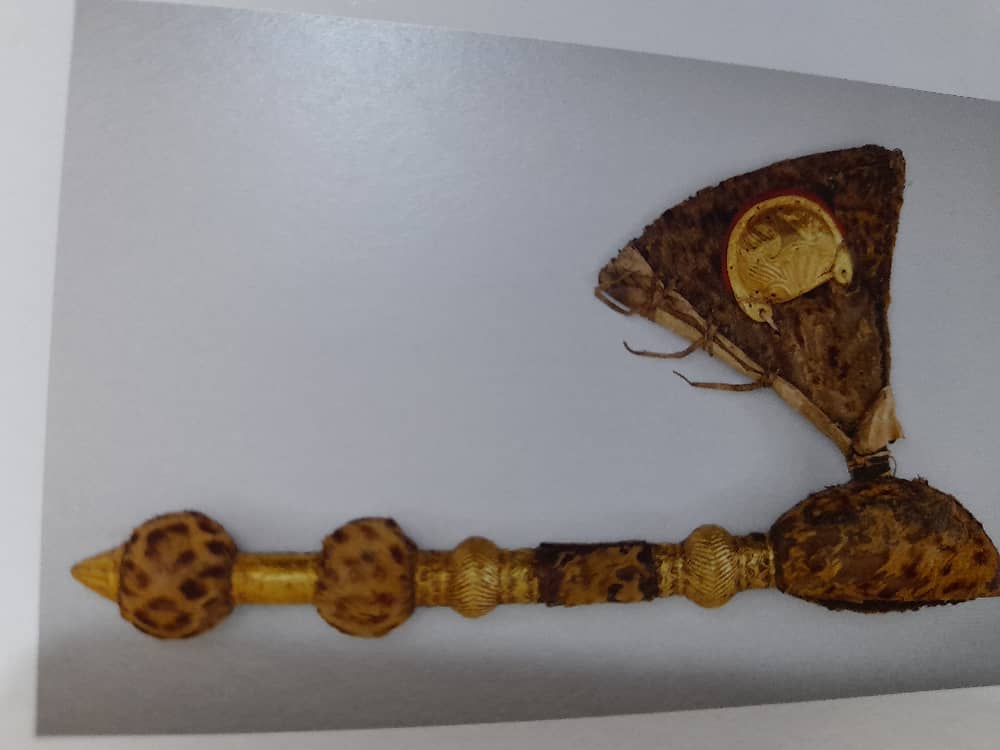
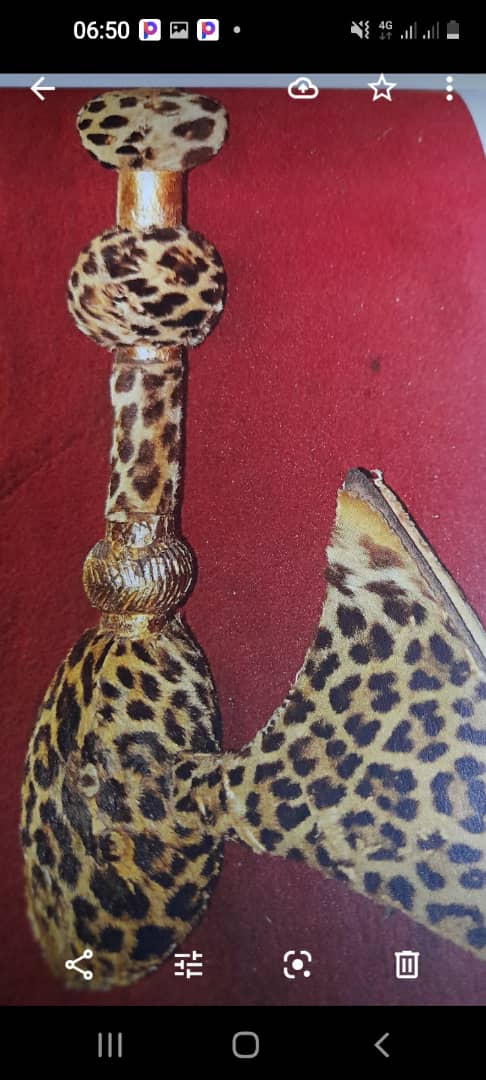
The Golden Axe is one of the most important regalia attached to the Golden Stool (Sika Dwa Kofi) .
The Golden Axe is used in diplomatic missions by Asantehene’s court officials (Ɛsɛn and Akyeame) asa symbole of peace.
The Golden Axe(Sika Akuma) presented to Queen Victoria .
Though , nither a linguist staff nor a sword , the Golden Axe is used as a leading Official Linguist Staff or a leading Official Sword of Office at a final stage of the last of a series of peaceful negotiations that aims at peace.
The Golden Axe , which was made in the days of Asantehene Kofi Karikari (Ofibriti Akyɛmpɔ) 1867-1874 , is said to have spiritual power of peace ; capable of turning a conflict situation into a peaceful one .
When the Golden Axe leads a negotiation team and the negotiation fails , Asante shall have no alternative but return home to be battle ready .
In the late 1860 s , Asantehene Kofi Karikari demonstrated to the British that the Asante nation was and still is for peace NOT war .
The Golden made to replace the original
When the British Officials at the Coast of what is now Ghana , misinterpreted the meaning of the Golden Axe to mean a symbol of war , Asantehene Kofi Karikari ordered that the Golden Axe to be given to the then Queen of Britain , Queen Victoria (1837-1901) through her representatives at the Coast as a sign of peace .
Asantehene Kofi Karikari , it is said , later replaced the Golden Axe to avoid the vacuum he created among Asante regalia .
It is for this reason that the Golden Axe in the British Museum of Mankind apper different in size and shape from what is in the Manhyia Palace Museum .
Source: The Kingdom Of Asantes/Teacher Safo Kantanka.
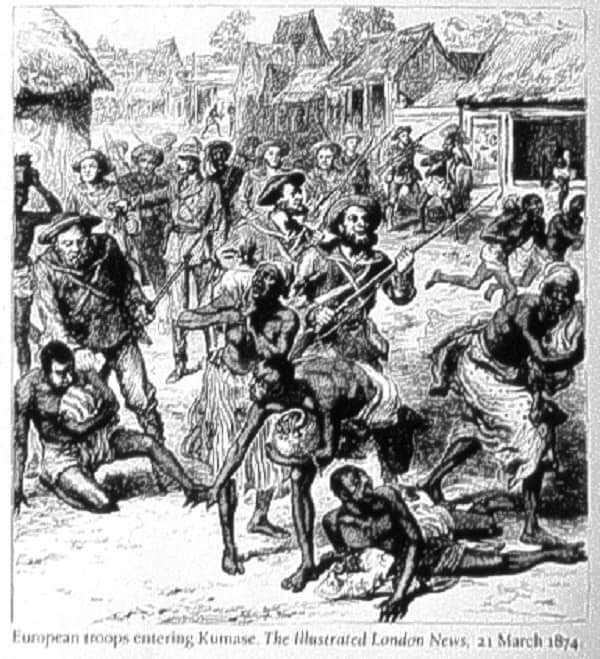
The Third Anglo-Ashanti War occurred from 1873 to 1874. British General Garnet Wolseley led 2,500 British troops and several thousand Indian and African troops against the Ashanti Empire.
For the first time the British decided to defeat and destroy the Ashanti Empire.
Helped by better trained soldiers, the introduction of quinine (which helped protect against disease), and the new maxim gun (machine gun) which gave the British forces a significant technological advantage over the Ashanti Army, the British defeated the Ashanti in the Battle of Amoaful on January 31, 1873.
The Ashanti capital of Kumasi was briefly occupied by the British and then burned.
The war ended in July 1874 when the Ashanti signed the Treaty of Fomena.
A lot of miseducation / misinformation is going on in our communities over how an incoming chief selects his official name (Stool Name) .
The sad aspect of the miseducation is the fact that an incoming chief selects his Official Name (Stool Name) by going to the Stool Room blaindfolded to touch any of the Blackend Stools in the Stool Room , so that the name of the past chief (ancestor) associated with it becomes his Official Name .
THIS IS NOT AND CAN NOT BE TRUE ; for as a rule , a royal is prohibited to enter a Stool Room (Nkonwa dan mu) until he becomes a chief .
It is also important to note that if selecting an Official Name by blindfolding and touching a stool were true , then it will be reasonable to say that the name of the first chief shall run through to the new chief . That is to say that Opoku Ware l would have touched Osei Tutu l’s stool to become Osei Tutu ll on and on and on .
THE ABSOLUTE TRUTH IS THAT ; after seclection , nomination and vetting of the incoming chief , he is given an Official Name in consultation with the Queen Mother , Abusuapanin and Abusuabaapani of the Royal Household in cmera .
Before sitting in camera , they would have consulted but very few of the elderly members of the household .
The First Choice Name is often the name of a departed chief with all the ingredients of bravery , had work , diplomacy and tact .
The names of two great chiefs may be combined ie. Atakora & Amaniampon , hence Atakora Amaniampon . The incoming chief may choose to use his own name or combine part of his own names with other names or even quin any name .
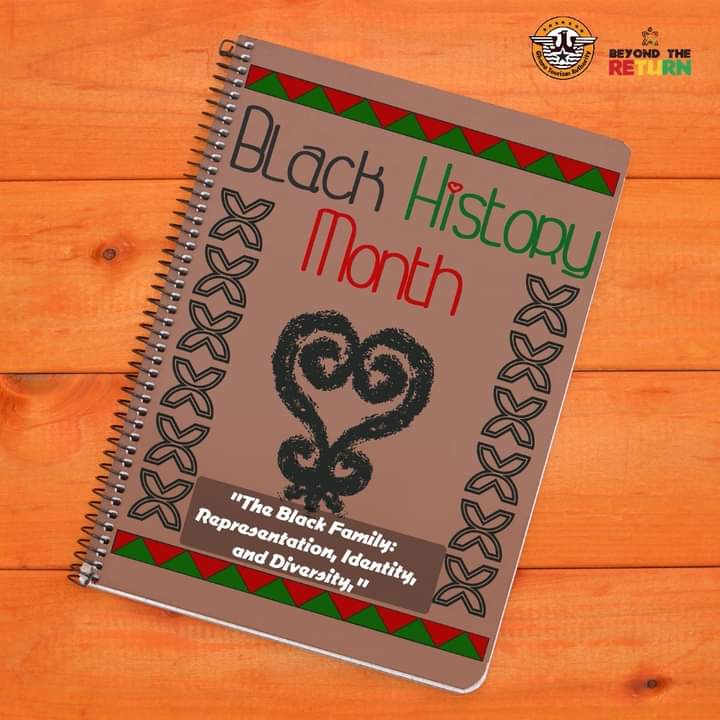
Today marks the begining of Black History Month, celebrated every February in the United States, Canada and other parts of the world.
The theme for this year’s commemoration is “The Black Family: Representation, Identity, and Diversity.”
This theme fits well into our 10-year Beyond the Return campaign which also highlights the Black Family’s importance and diversity irrespective of location be it African, American, Caribbean, Black Canadian, or from the continent of Africa. We are all a global family.
Join us as we take you through the story of the “Black Race and its struggles over the years to 2021. We will be sharing the history, stories, creativity and beauty of the black people.
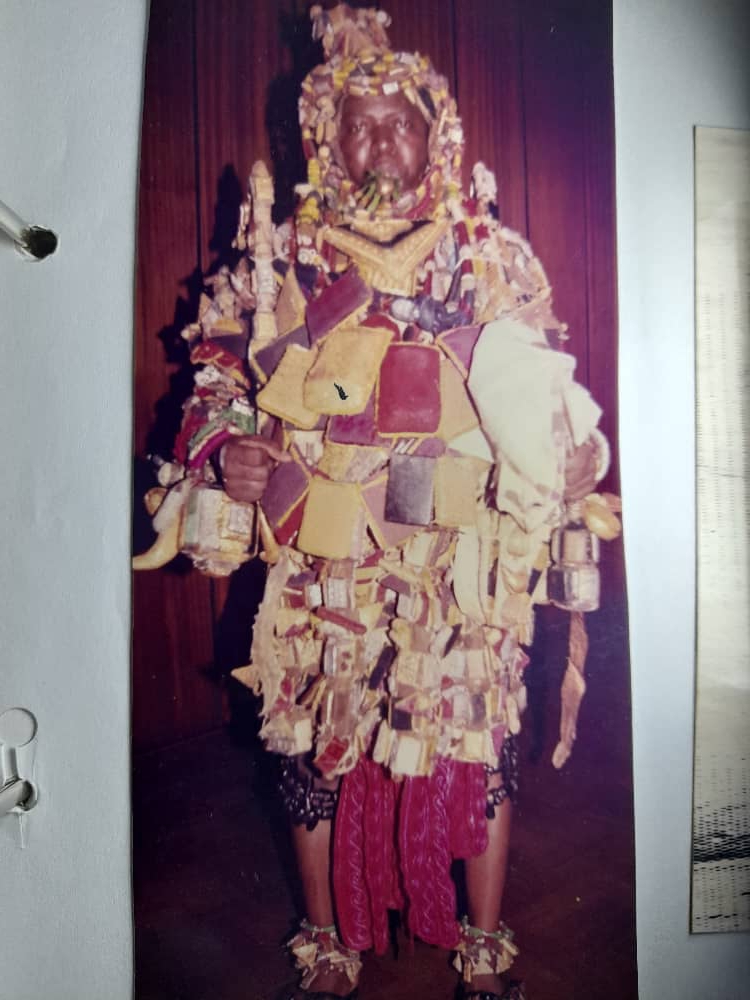
Many are those that believe that every Asantehene wears the bulletproof wear jacket (Batakarikeseɛ) twice in his lifetime . But that is not the case and cannot be the case .
An Asantehene wears the Batakarikeseɛ during his enstoolment as Asantehene.
During the funeral of his predecessor .
During the funeral of an Asantehemaa .
Should more than one Asantehemaa die in office during his time as Asantehene , he will have to wear the Batakarikeseɛ during their funeral .
During war in which he , Asantehene , has to be present at the war front .
Some Asantehene , not to mention , Opoku Ware l , Osei Kwadwo , and Osei Bonsu , who fought many wars had to wear it a number of times (5 or more times) in their lifetime .
Asantehene Kusi Obodum wore Batakarikeseɛ twice in his lifetime ; that is during his enstoolment and the funeral of his predecessor .
Kwaku Dua ll wore it but just once in his lifetime . This is because , he died in office only 40 days after his enstoolment . He did not stay that long in office to wear Batakarikeseɛ to celebrate the funeral of his predecessor and an Asantehemaa or go to war .
In the light of the foregoing therefore , there’s no limit to the number of times an Asantehene has to wear Batakarikeseɛ in his lifetime . KANTANKA
Happy 86th anniversary of the Restoration of Asante Federation. Piawwwwwww!!!!
Exactly 86 years today (on 31st January, 1935), Asanteman was restored to its glory under Otumfuo Sir Osei Agyeman Prempeh II. He was the first to use the title “Otumfuo”
In December 1895, the British left Cape Coast with an expeditionary force. It arrived in Kumasi in January 1896 under the command of Robert Baden-Powell. The Asantehene directed the Ashanti not to resist, as he feared a genocide.
Shortly thereafter, Governor William Maxwell arrived in Kumasi as well. Britain annexed the territories of the Ashanti and constituted the Ashanti Crown Colony on 26 September 1901. Asantehene Agyeman Prempeh was deposed and arrested, and he and other Ashanti leaders were sent into exile in the Seychelles.
The Asante Union was dissolved[citation needed]. A British Resident was permanently placed in the city of Kumasi, and soon after a British fort was built there.
As a final measure of resistance, the remaining Asante court not exiled to the Seychelles mounted an offensive against the British Residents at the Kumasi Fort.
The resistance was led by Asante queen Yaa Asantewaa, Queen-Mother of Ejisu. From March 28 to late September 1900, the Asante and British were engaged in what would become known as the War of the Golden Stool. In the end, the British were victorious; they exiled Asantewaa and other Asante leaders to the Seychelles to join Asante King Prempeh I.
In January 1902, Britain finally designated the Ashanti Kingdom as a protectorate. the Ashanti Kingdom was restored to self-rule on 31 January 1935. Asante King Prempeh II was restored and the Ashanti Kingdom entered a state union with Ghana on independence from the United Kingdom.
People in the olden days described Asantes as “blood- thirsty people ” due to the human sacrifices they(We) offered during the burial of Asantehene.
The story is that, we Asantes have belief in the continuity of life in the land of the dead (asamando). Therefore a king is supposed to be accompanied by servants and bodyguards to continue his dynasty in asamando.
According to R.S. Rattray in Religion and Art in Asante, during the death of Asantehene Kwaku Dua I, some royals offered to be executed to accompany him to asamando and support him over there. Sometimes the favourite wife of the king is killed by abrafuo to accompany Asantehene and continue the life with him in Asamando.
This is also what caused the shifting of Akans Patrilineal inheritance to matrilineal by Nana Abu Bonsrah during the burial of his father at Adansi. His mother was executed to accompany his father Akora Foripan to Asamando. Alongside, some of his nephews were killed .
Almost all the Akan clans inheritance is maternal. This was instituted by Nana Abu Bonsra of Adansi Fomena. He himself inherited paternally from his father Akora Foripan of Adansi Ayaase.
Due to the severe pains his nephews and other members of his family suffered including his own mother who was executed to accompany his father to the land of the dead (Asamando), during his enstoolment as Adansihene, he shifted the system of inheritance from paternal to maternal that most of the Akans who migrated from Adansi is enjoying today.
That is “Abusua” literally meaning “Imitating Abu” or “Sua Abu”. This incident happened in the 15th century
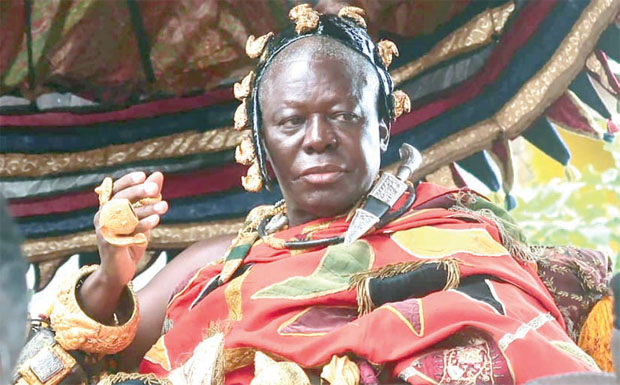
May Asanteman continue to prosper. Long Live His Royal Majesty.
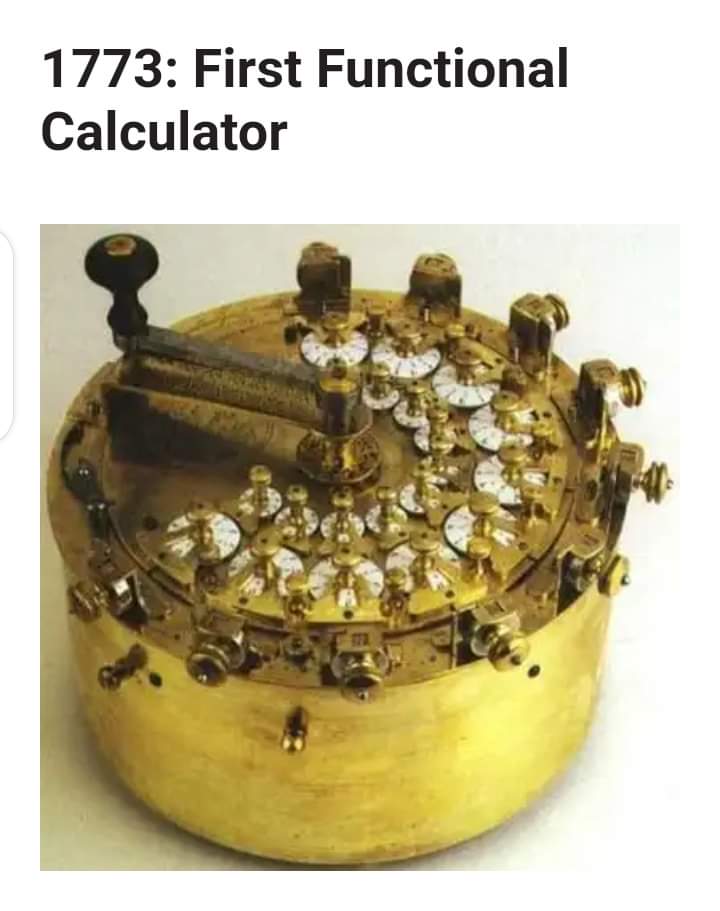
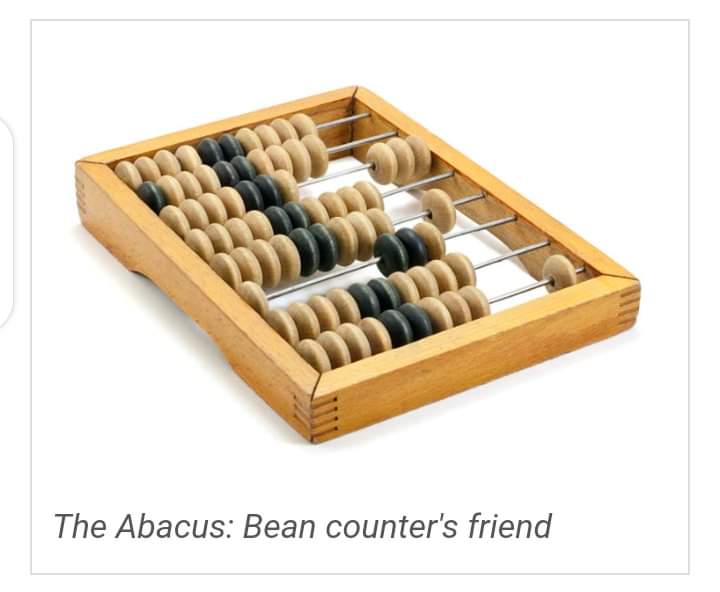
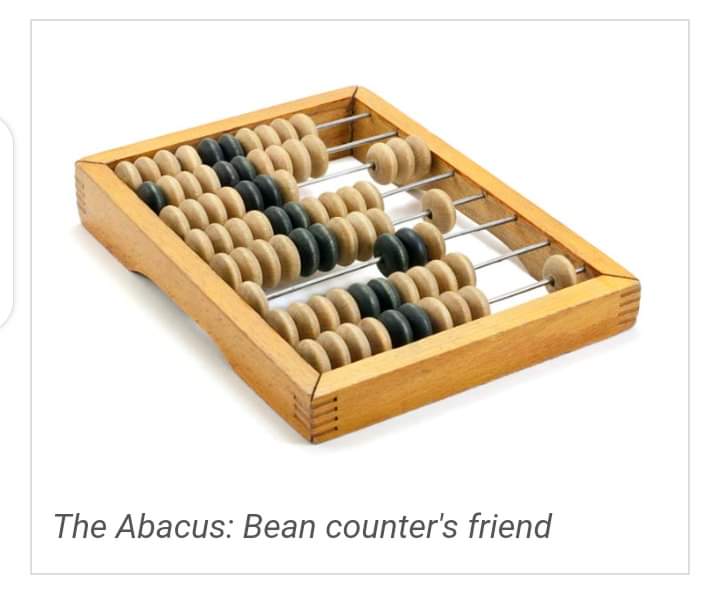
In the very beginning, of course was the abacus, a sort of hand operated mechanical calculator using beads on rods, first used by Sumerians and Egyptians around 2000 BC.
The principle was simple, a frame holding a series of rods, with ten sliding beads on each. When all the beads had been slid across the first rod, it was time to move one across on the next, showing the number of tens, and thence to the next rod, showing hundreds, and so on (with the ten beads on the initial row returned to the original position).
It made addition and subtraction faster and less error-prone and may have led to the term ‘bean counters’ for accountants.
But that was where the technology more or less stuck for the next 3,600 years, until the beginning of the 17th century AD, when the first mechanical calculators began to appear in Europe. Most notably, the development of logarithms by John Napier allowed Edward Gunter, William Oughtred and others to develop the slide rule.
Circular Slide Rule The Slide Rule: good enough for Dr. Strangelove The slide rule is basically a sliding stick (or discs) that uses logarithmic scales to allow rapid multiplication and division. Slide rules evolved to allow advanced trigonometry and logarithms, exponentials and square roots.
Even up to the 1980s, knowing how to operate a slide rule was a basic part of mathematics education for millions of schoolchildren, even though by that time, mechanical and electric calculating machines were well established. The problem was that these weren’t portable while the slide rule fitted into the breast pocket of your button-down shirt.
Real Rocket Scientists used slide rules to send Man to the Moon – a Pickett model N600-ES was taken on the Apollo 13 moon mission in 1970.
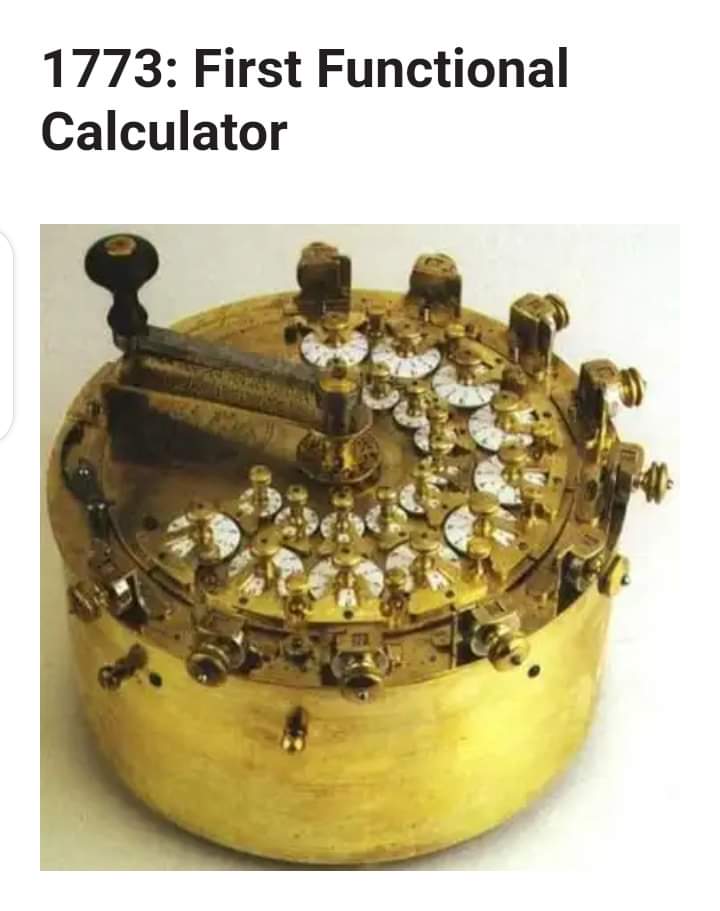
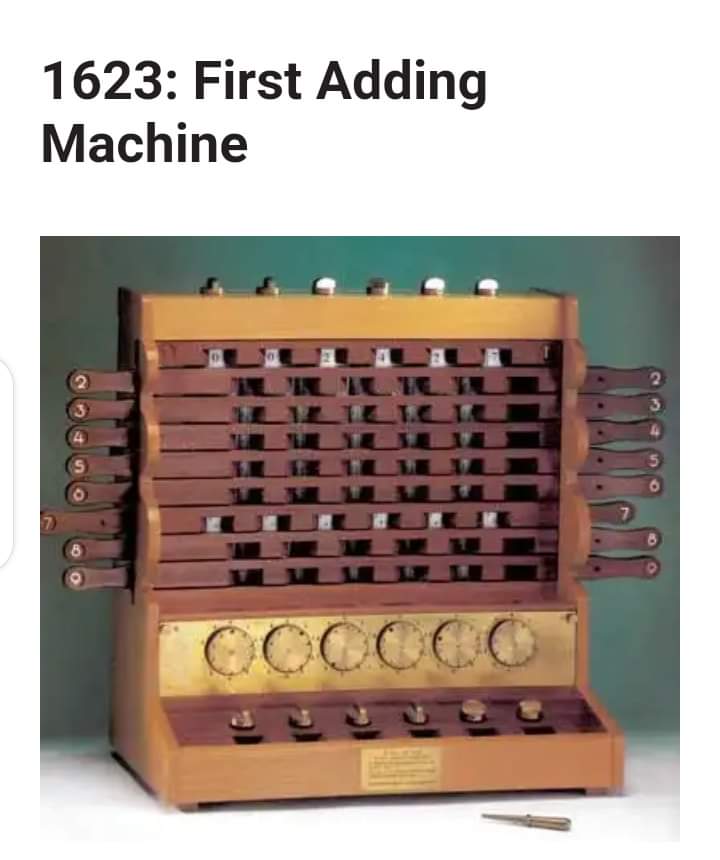
Gears, Wheels and Buttons The first mechanical calculator appeared in 1642, the creation of French intellectual and mathematics whizz kid Blaise Pascal as “a device that will eventually perform all four arithmetic operations without relying on human intelligence.”
Pascal’s machine used geared wheels and could add and subtract two numbers directly and multiply and divide by repetition. Gottfried Leibniz then spent the best part of his life designing a four-operation mechanical calculator, based on his ingenious slotted ‘Leibniz wheel,’ but ultimately failing to produce a fully operational machine.
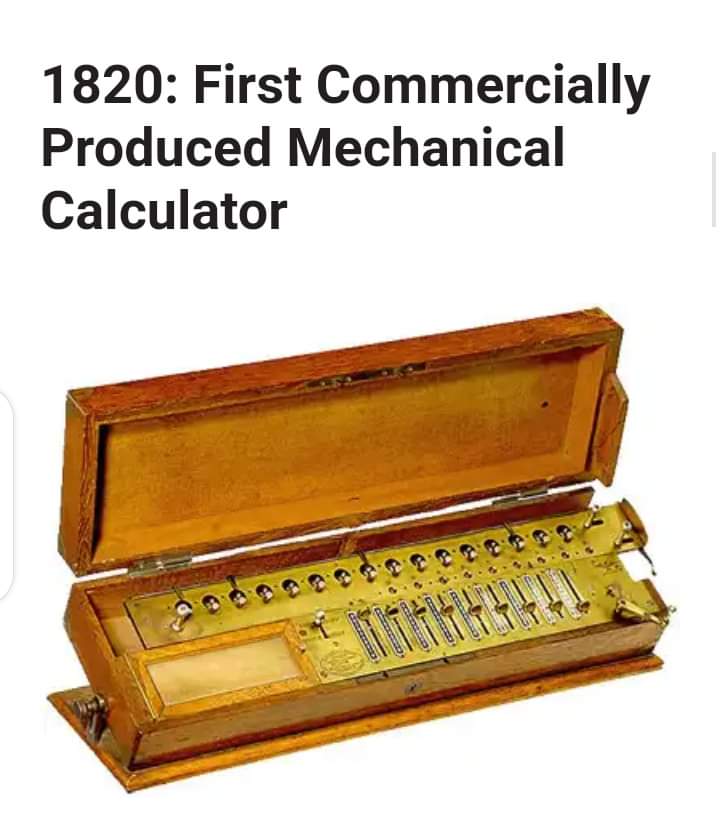
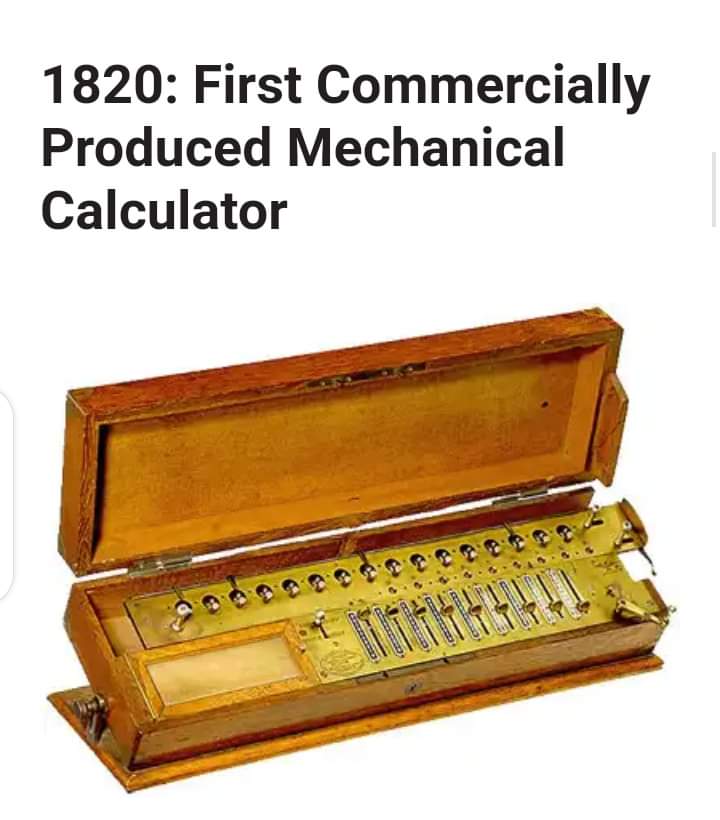
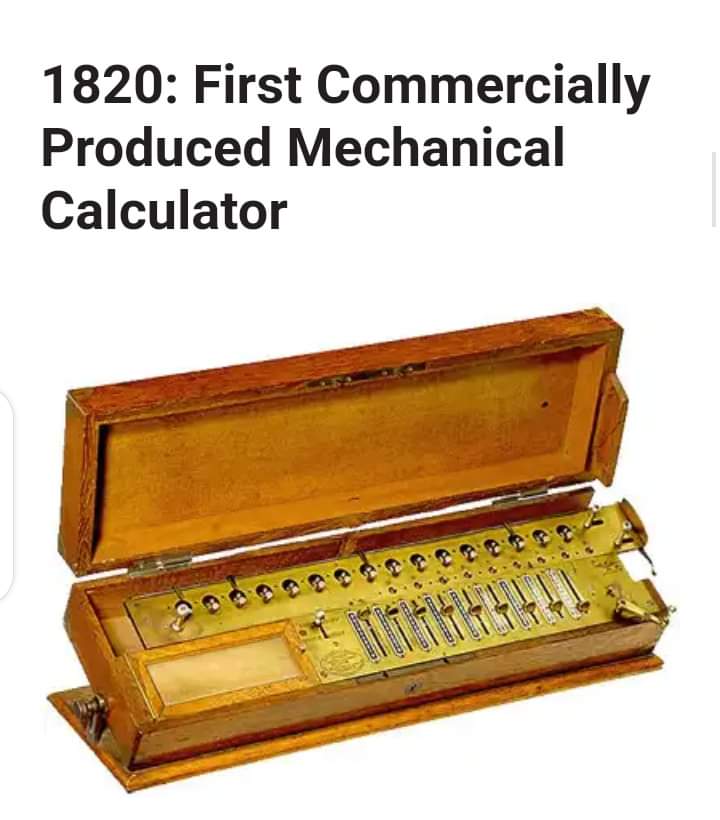
The Arithmometer The Arithmometer: Soldiered on till 1915 That had to wait until 1820 and the patenting in France of Thomas de Colmar’s four function Arithmometer.
This first commercially viable counting machine was manufactured from 1851 to 1915 and copied by around 20 companies across Europe.
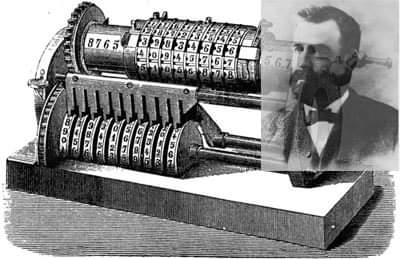
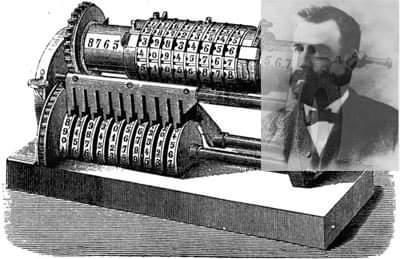
By then, the main tide of innovation had moved across the Atlantic, with the development of hand cranked adding machines like the Grant Mechanical Calculating Machine of 1877 and, more famously the P100 Burroughs Adding Machine developed by William Seward Burroughs in 1886.
This was the first in a line of office calculating machines that made the Burroughs family fortune and enabled the son, William S. Burroughs, to pursue a career consuming hallucinogenic drugs and writing subversive novels like ‘The Naked Lunch’.
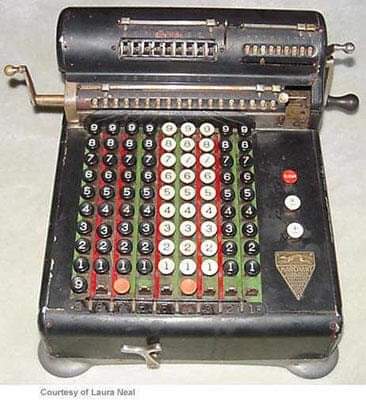
The Comptometer The Comptometer: Press key calculating at last A further step forward occurred in 1887 when Dorr. E. Felt’s US-patented key driven ‘Comptometer’ took calculating into the push button age. This machine, too, spurred a host of imitators.
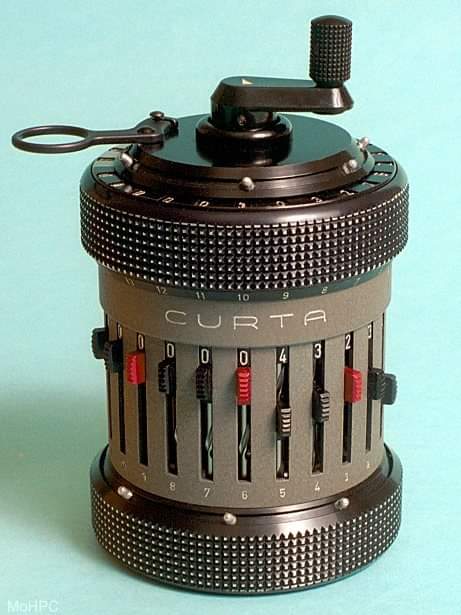
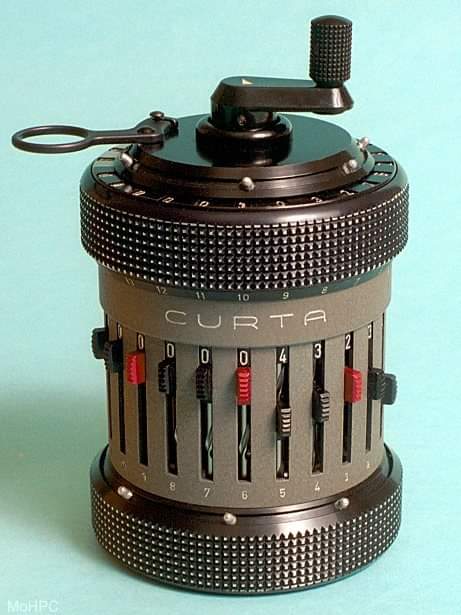
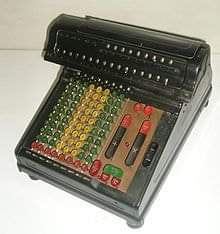
The Curta calculator, which first appeared in 1948, was perhaps the ultimate expression of the mechanical calculator, so compact that it could, somewhat lumpily, fit into a pocket and was capable of addition, subtraction, multiplication and division.
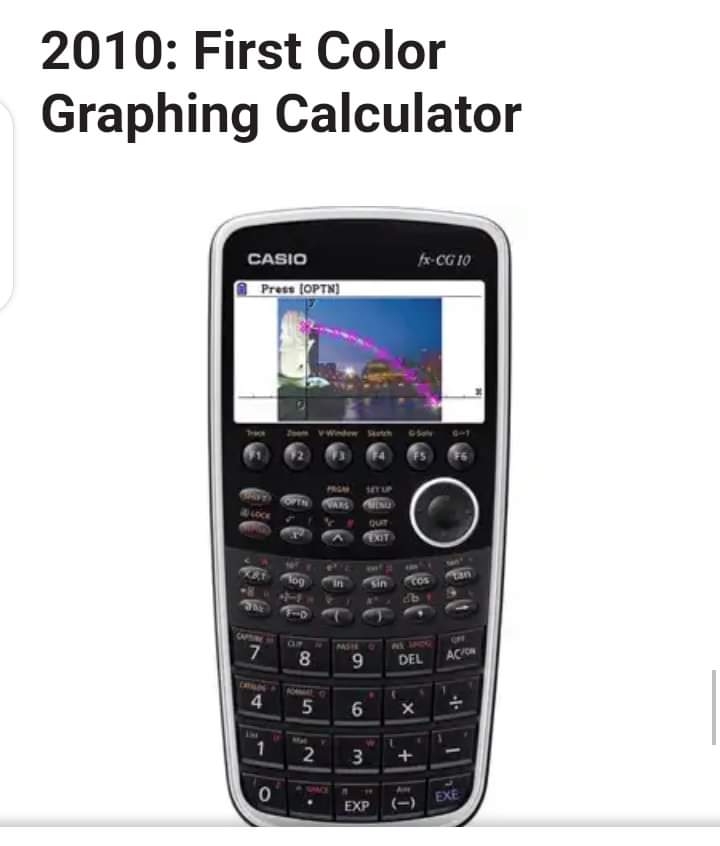
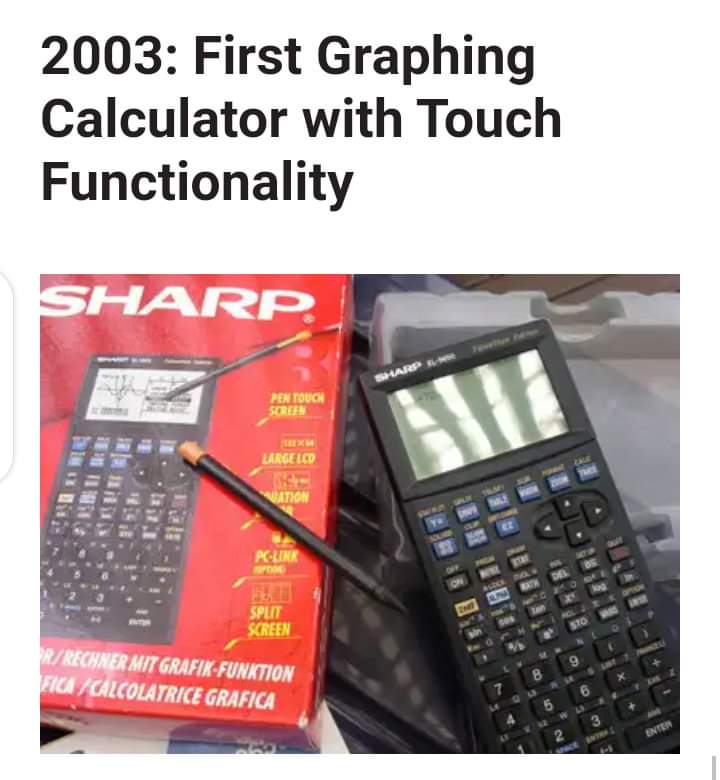
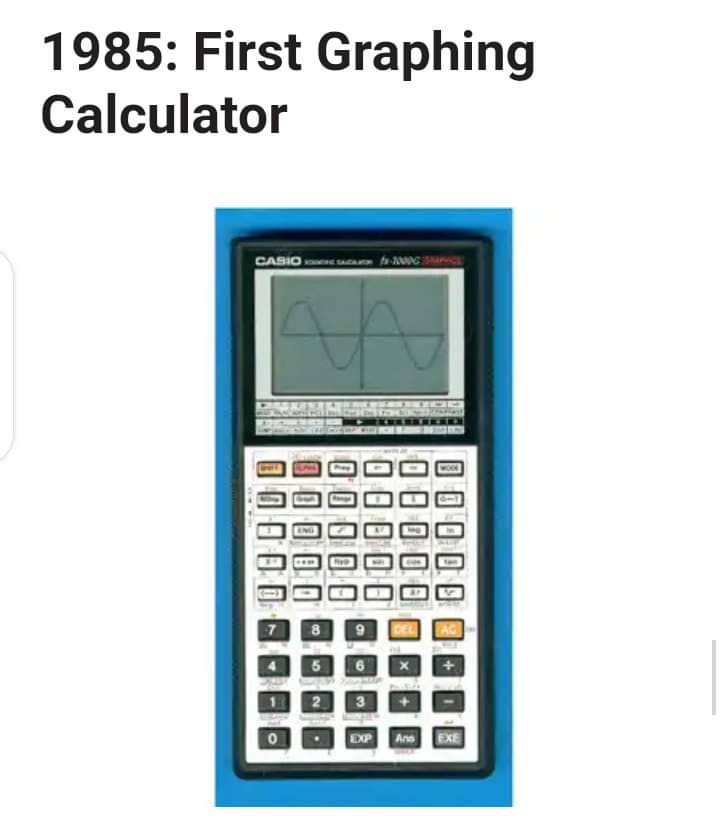
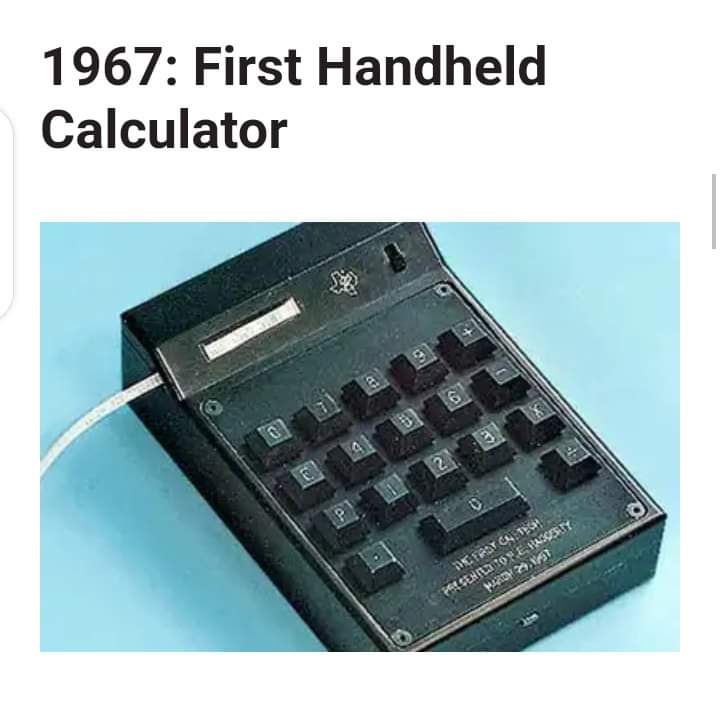
Machines like this ensured that mechanical calculators dominated 20th century office life all the way through to the late 1960s. By then, electronics were beginning to take over, as we shall see in the next part of this series.
The Curta calculator Curta calculator: mechanical could be compact Business Calculator: The Electronic Age The story of the electronic calculator really begins in the late 1930s as the world began to prepare for renewed war. To calculate the trigonometry required to drop bombs ‘into a pickle barrel’ from 30,000 feet, to hit a 30-knot Japanese warship with a torpedo or to bring down a diving Stuka with an anti aircraft gun required constantly updated automated solutions.These were provided respectively by the Sperry-Norden bombsight, the US Navy’s Torpedo Data Computer and the Kerrison Predictor AA fire control system.
All were basically mechanical devices using geared wheels and rotating cylinders, but producing electrical outputs that could be linked to weapon systems.
During the Second World War, the challenges of code-breaking produced the first all-electronic computer, Colossus. But this was a specialised machine that basically performed “exclusive or” (XOR) Boolean algorithms.
The ENIAC ENIAC: less processing power than a non-smart phone. However, it did this using hundred of thermionic valves as electronic on/off switches, as well as an electronic display.
The application of this technology to the world’s first general calculating computer had to wait until 1946 and the construction of the ENIAC (Electronic Numerical Integrator And Computer) as a completely digital artillery firing table calculator also capable of solving “a large class of numerical problems”, including the four basic arithmetical functions.
ENIAC was 1,000 times faster than electro-mechanical computers and could hold a ten-digit decimal number in memory. But to do this required 17,468 vacuum tubes, 7,200 crystal diodes, 1,500 relays, 70,000 resistors, 10,000 capacitors and around 5 million hand-soldered joints. It weighed around 27 tonnes, took up 1800 square feet of floorspace and consumed as much power as a small town. Not exactly a desktop solution.
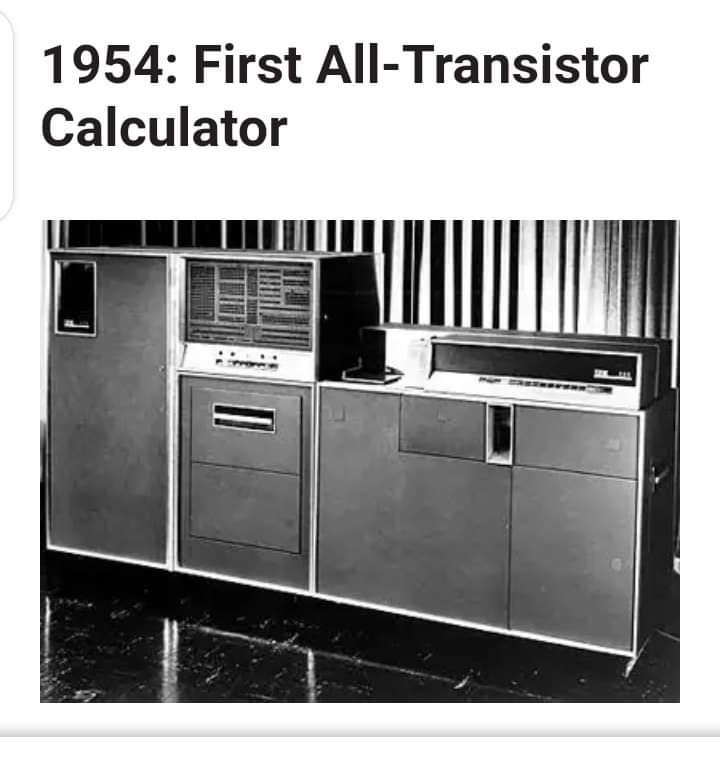
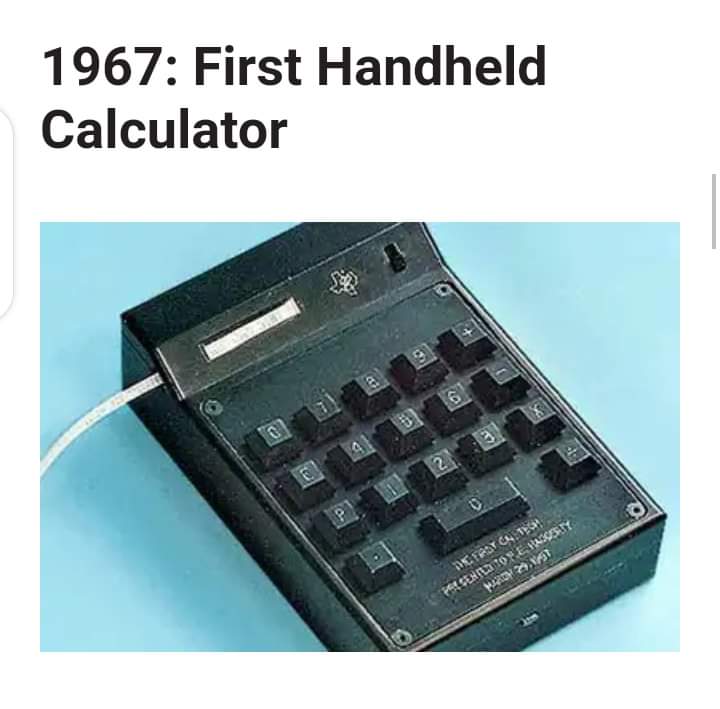
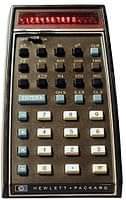
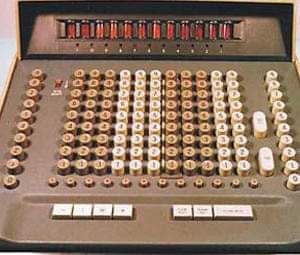
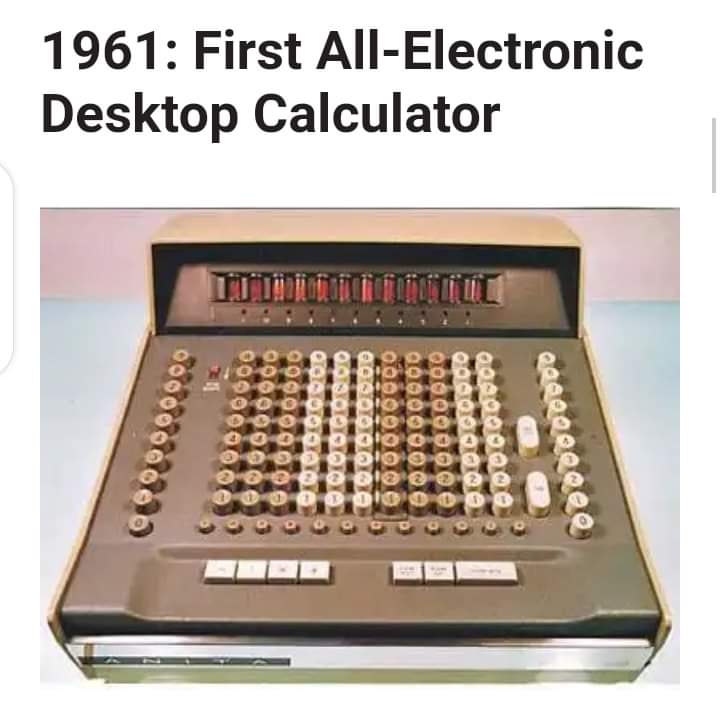
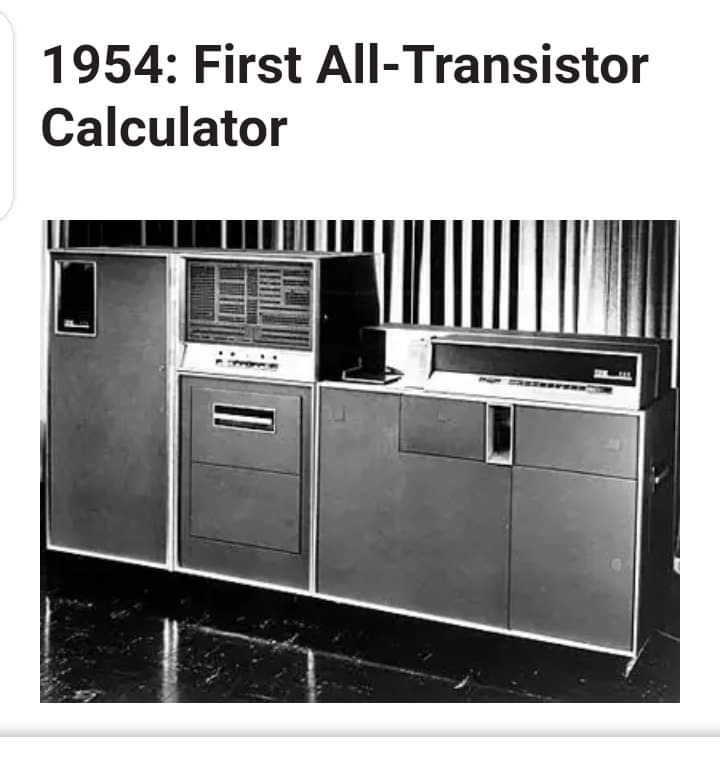
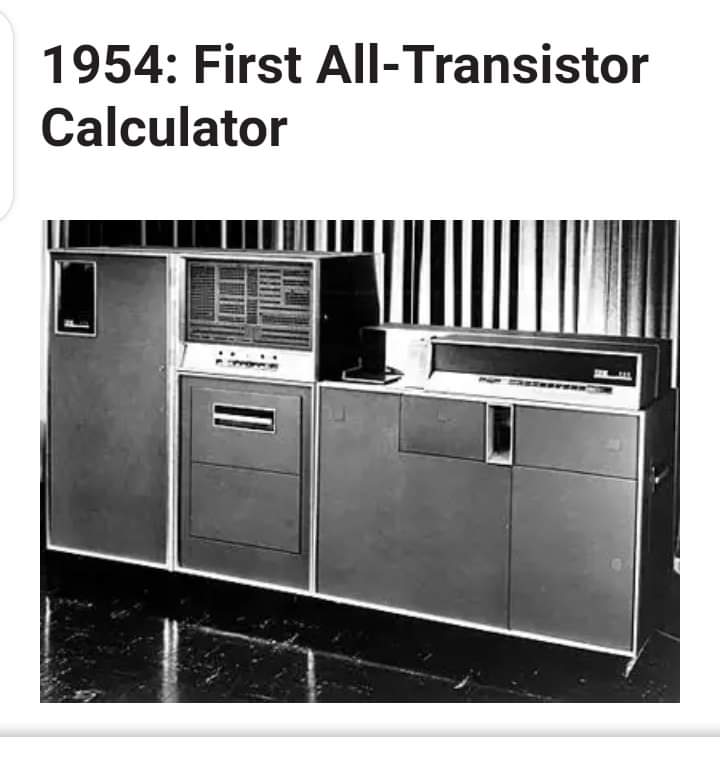
Valve and Tube Calculators Electronic calculating for the office had to wait on the miniaturisation of valves and the development of solid state transistors.
Source :The History Of The Calculator By Nick Valentine
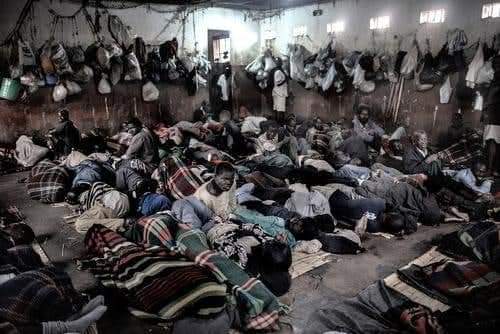
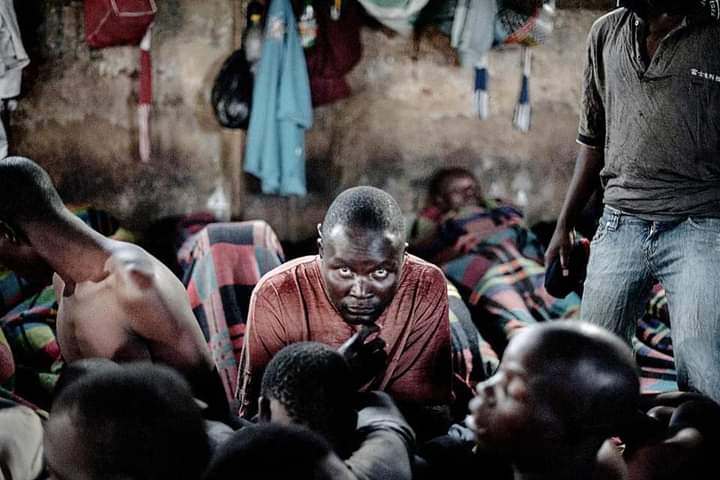
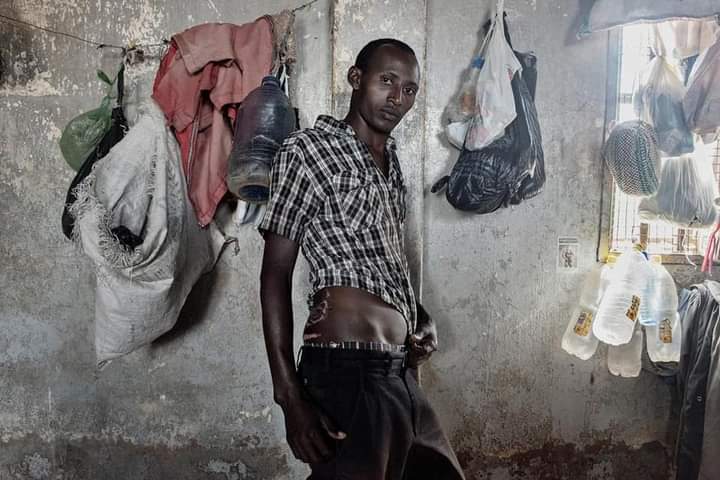
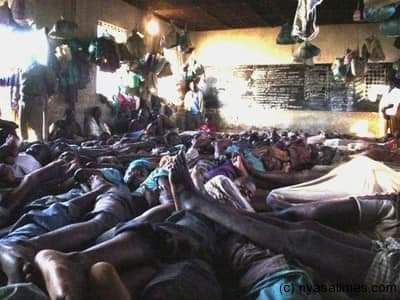
CHIKURUBI MAXIMUM PRISON🇿🇼 -is known for its overcrowding, guard brutality, malnutrition, overcrowding, no healthcare, and poor sanitary conditions. Prisoners here spend much of the day locked up and have few recreational opportunities.
KINSHASHA CONGO -is a prison in Congo with more than 850 prisoners packed like sardines into a facility built for 150. Inmates sleep in hallways, near septic tanks etc disease outbreaks is a daily occurence in the prison.
KIRIKIRI MAXIMUM PRISON 🇳🇬 -Besides the problem of overcrowding, it is also infamous for its degrading treatment of prisoners , appalling living conditions, sub-standard medical care, and a very high death rate.
THE MUKOBEKO MAXIMUM PRISON🇿🇲 -prison cell was originally built to accommodate one inmate per cell. However, now it holds up to 15 prisoners.
NAIROBI PRISON 🇰🇪 -Built in 1911 for 800 prisoners, which boomed to 3,000 in 2003, this prison is one of the most congested in Africa. The prison cells reek of sweat, human waste, and filth with the stench of garbage hanging in the air.
KAMITI MAXIMUM PRISON🇰🇪 -this prison has gained notoriety due to the unspeakable squalor that the prisoners are subjected to. The prison, has earned a reputation for instances of sodomy, beating of inmates to death, and epidemics where malnutrition, cholera, and ulcers were normal occurrences.
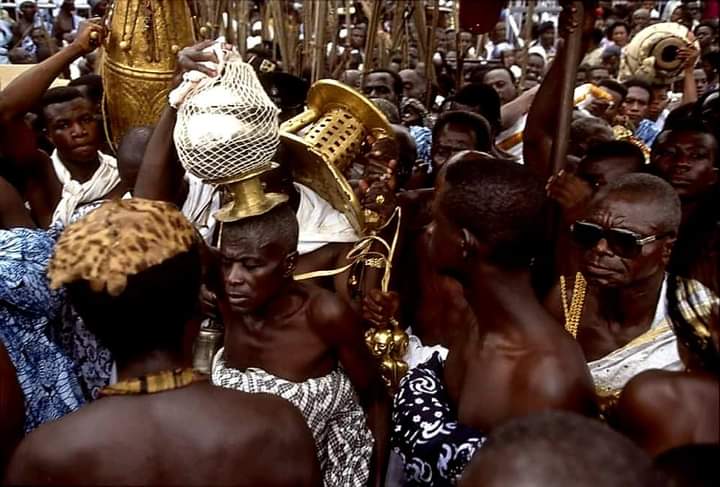
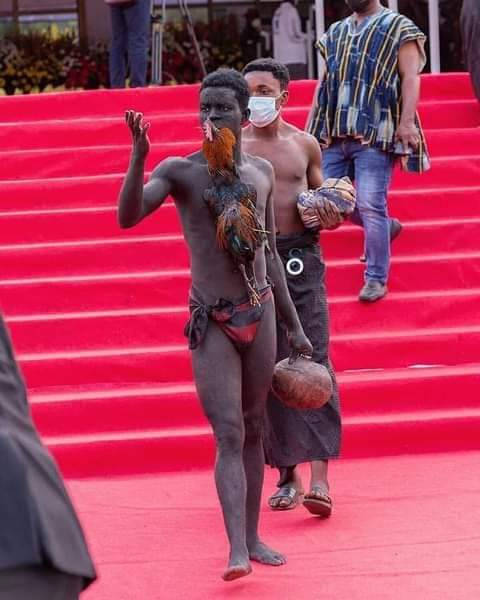
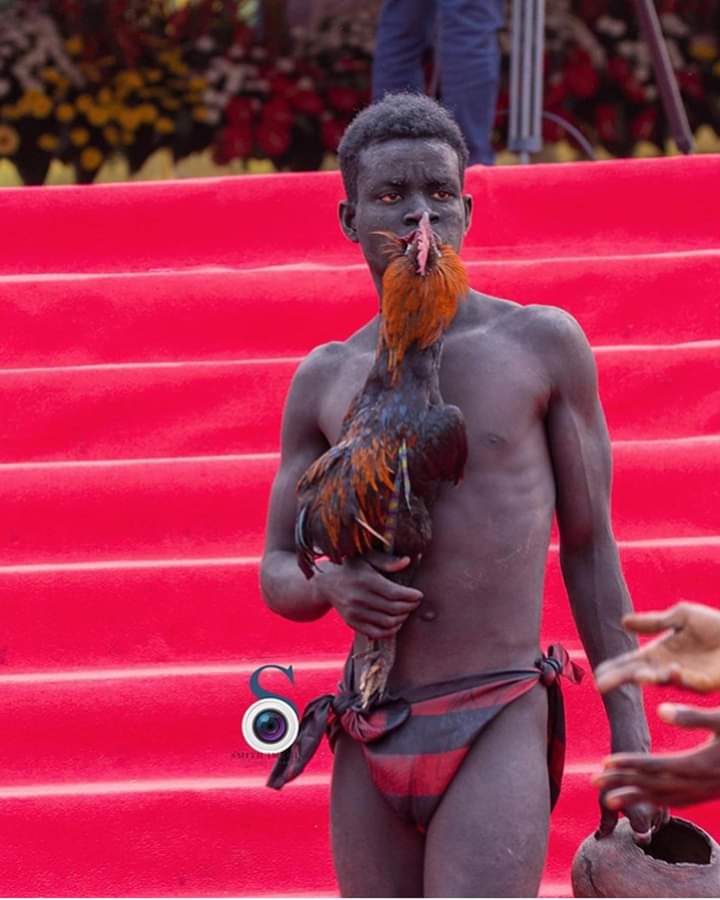
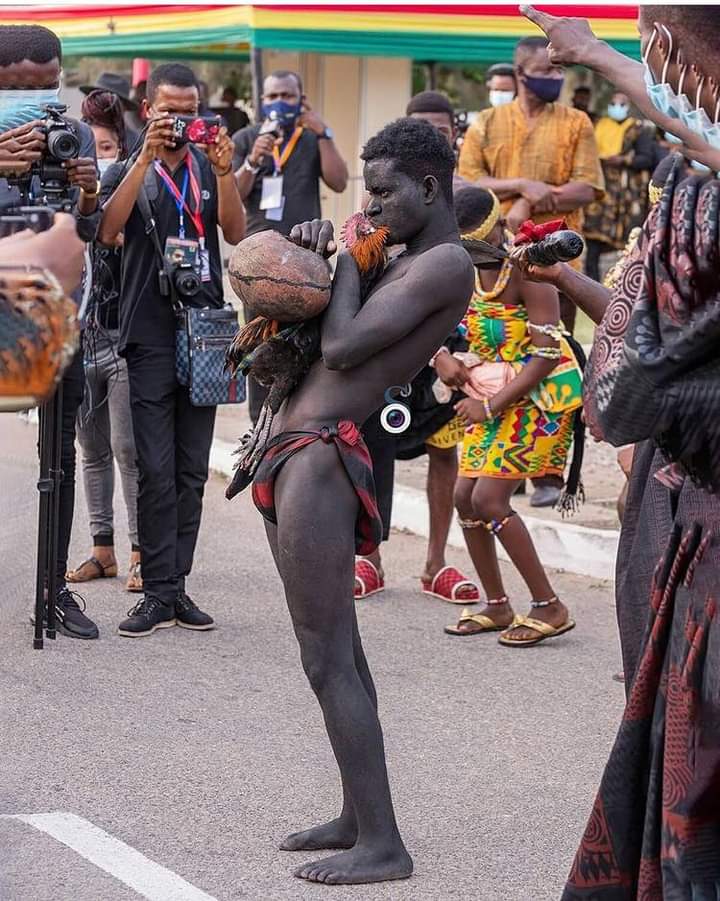
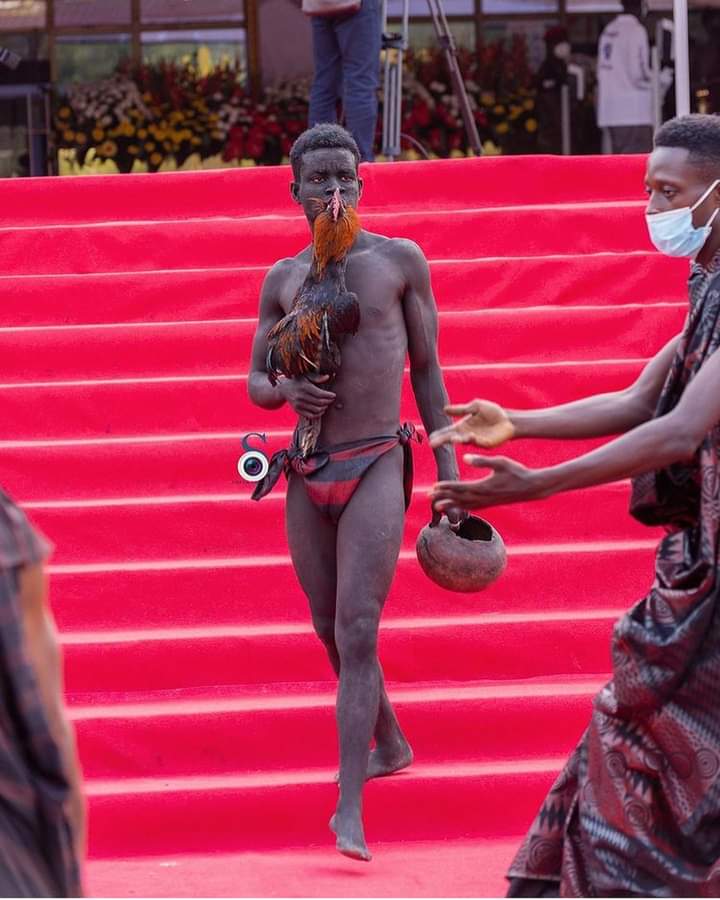
The cock sacrifice. The Akan or generally ancient natives believes that, the soul leaving ones body through the mouth. He’s trying to catch the sunsum (shadow soul) of the cock.
In Asantes culture when a prominent person or a royal dies, this is commonly seen.
A cock is an important animal. It’s crow wakes us up in the morning every day.
Despite its important and majestic, its powerless in the jaw of death. The cock signifies man, and the man signifies death.
Thus is to remind us that we are just mere mortals. No matter our importance, power and significance in society we cannot escape death.
This remind me of Akan saying “Nipa bɛgyee ne din kɛkɛ na w’ammɛ pre nyinkyerɛ” which means a man was born to seek the glory of his name not long life.
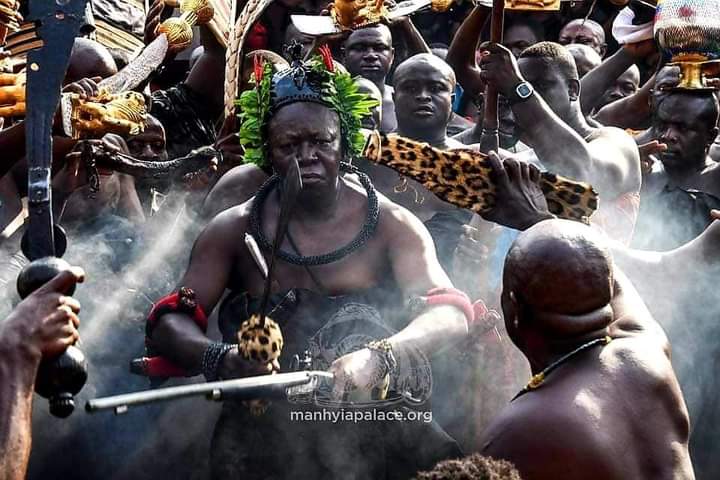
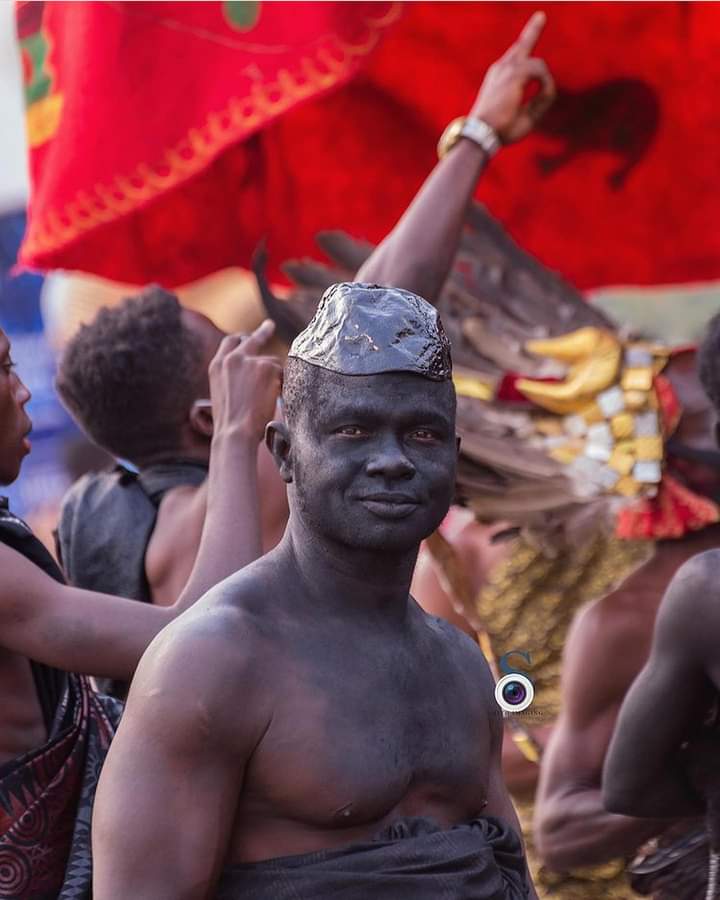
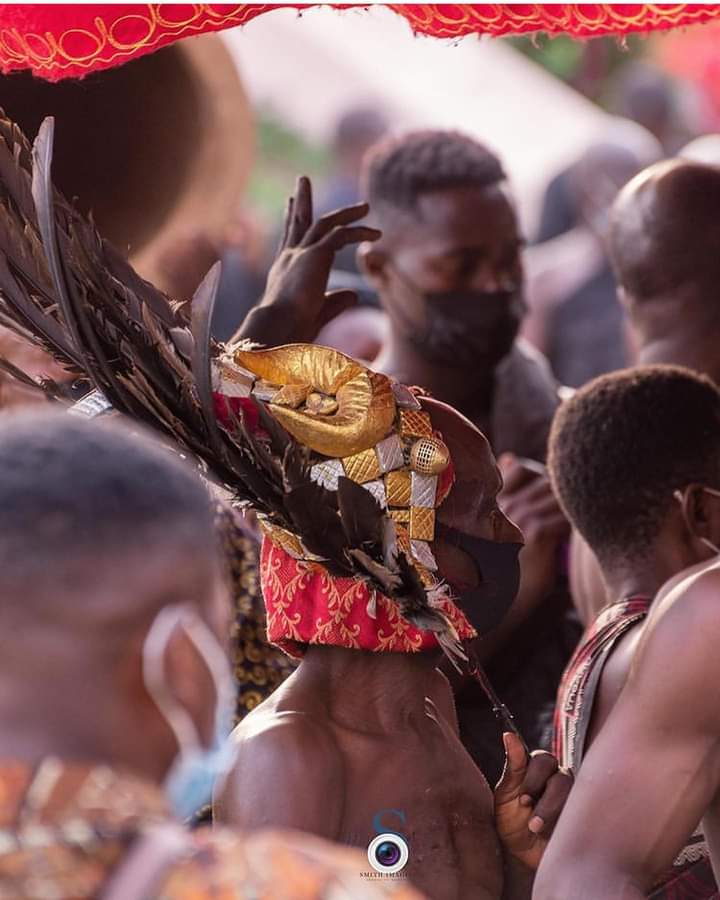
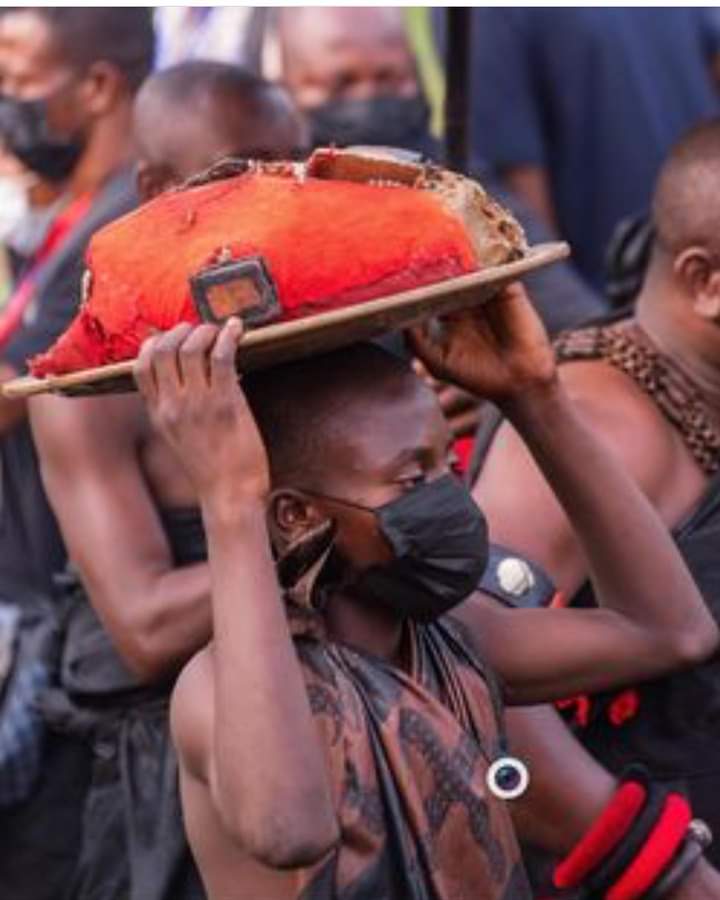
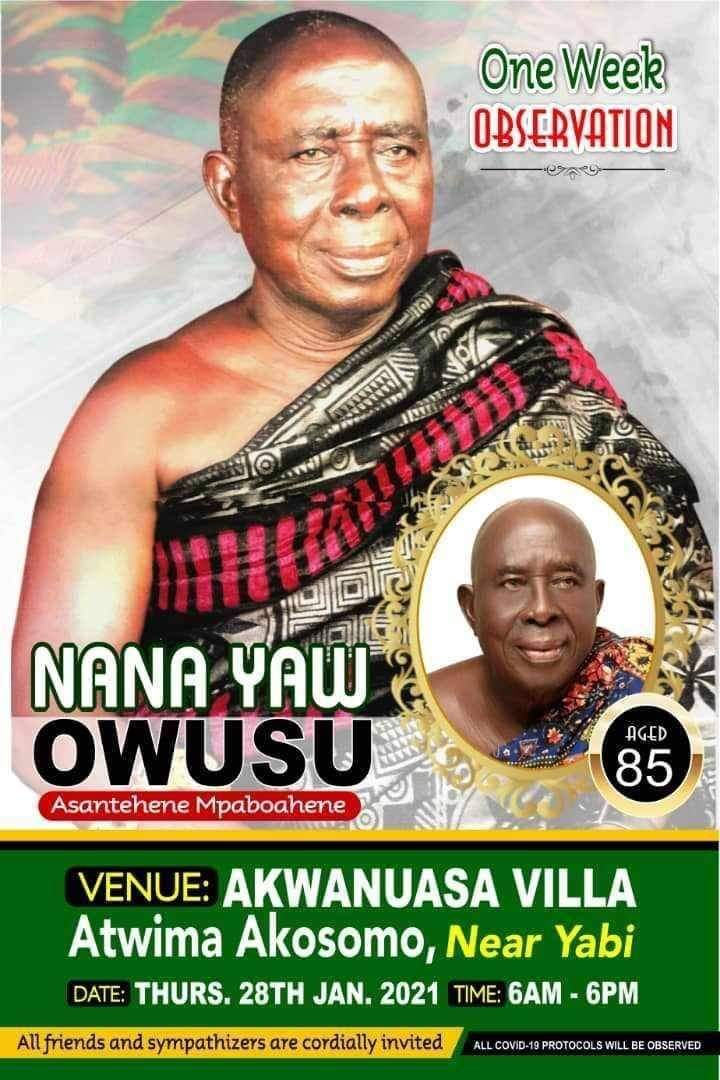
The mpaboahene of Asantehene has a black stool. He swears to the Asantehene with the Ahwehwebaa sword. The Ahwehwebaa sword is a sword of less significance than the Mpomponsuo sword. It is a stool of matrilineal desendent.
This stool was created by King Osei Tutu, Opimsuo,'” It is said io have been created before the Derkyira war with Ntim Gyakari. The main duties of the mpaboahene are as follows: The Mpaboahene is responsiblefor the safe-keeping of the Golden Sandals of Asantehene. He is responsible for putting the sandals on the Kings feet. He is responsible for the keeping of MpaboaKessie the great, sandals. It is said that the Mpaboa Kessie contain medicine and are worn by the King on special occasions such as war time, business meeting of the state.
He is responsible for all the various sandals of Asantehene, e.g golden sandals, silver sandals, etc. It is said that the golden sandals of Asantehene are worn on festive ocecasions and when going to Akrafieso (plate of ancestral worship). The silver sandals are also worn at the discretion of the King. It is said that they can be worn when going to the place of worship or just at normal.
The first chief of this stool was called Gyeabuor. He went to the Denkyira war at Fehyiase, where Ntim Gyakari, the Denkyira chief, was defeated and decapitated by the Asantes.
Gyeabuor was succeededon the stool by Beresah. He was a brother of chief Gyeabuor. He went to the Takyiman war in which Ameyaw, the Tachimanhene, was defeated and beheaded by the Asante during the reign of King Opoku Ware, Asantehene. He also went to the Gyaman war, in the reign of Asantehene Opoku Ware, in which Abo Kofi, the Gyamanhene, was defeated and decapitated by the Asantes. He was on the stool in the reign of Kusi Bodum Chief Beresah, was succeeded on the stool during the reign of Nana Osei Kwadwo by Asare. He went to the Banda war where Worosa, the ohief of Banda, was captured and beheaded by the Asante Asare as a brother of Beresah.
Asare was succeeded on the stool by his nephew, Gyeabuor. It is said that Gyeabuor ll was on the stool during the reign of Nana Osei Asibe Bonsu, Asantehene. Gyeabuor ll went to the Fanti war where at Anomabu the King, Osei Bonsu Panin alias 0sei Tutu Kwame for the first time in the annals of Asante history placed the state sword into the sea, winning the traditional appellation of “Bonsu”, meaning the destroyer of the sea”. Gyeabuor ll also went to the Gyaman war where Adinkra was captured and beheaded by the Asante. Gyeabuor ll was succeeded on the stool by Gyeabuor III. It is said that he was a brother of his predecessor Gyeabuor I. The history will continue during the final funeral rite.
Before finding himself as a slave, working hours on end and living in hard conditions on the Frontier plantation in Jamaica, Takyi was a Fanti king from Gold Coast, now modern Ghana.
There are no records of which group of Fantis he ruled over before becoming a slave but research indicates that he might have been the ruler of a settlement in Kommenda or Kormantse in the central region of Ghana. Takyi was also a wealthy merchant until he was captured during the Kommenda Wars and sold off into slavery when his state was defeated. (The Komenda Wars were fought between the British, Dutch and some Fante states from 1684 – 1700 over control and settlement of some parts of then Gold Coast)
In 1759, after years of toiling and suffering on the plantations, Takyi and his allies, Yaw, Sobadu and Kwarteng, who were also of Ghanaian descent, escaped into a cave far beyond their plantations to plan a rebellion.
They escaped during the day when everyone was occupied with work or at night and returning before daybreak. Takyi’s plan was to defeat the British and all slave masters and create Jamaica as a separate and independent black colony.
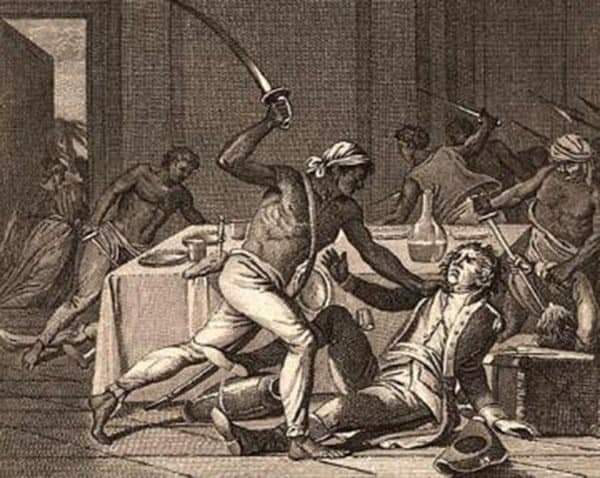
In May of 1760, Takyi and his followers started the revolt in the early hours of the morning, starting at the plantation where they worked, killing the owners and thus freeing all the slaves. The former slaves joined in the revolt immediately and a few run off to spread the word of the revolt on other plantations. With a good number of followers, they quickly made their way to Fort Haldane, where Takyi killed the storekeeper and instructed his men to pick up all the machines and gunpowder they could get.
According to oral history, Takyi and his slaves were strengthened and protected by the Obeah spiritual leaders, who had been labelled witchdoctors by the westerners in Jamaica. The British commanded the Maroons and their local army to fight Takyi and his men as well as kill any Obeah leader.
The killing of an Obeah leader angered Takyi and his men, who by now had a strong army with close to 80 different groups and had taken control of a greater part of the land. Consequently, they killed several more plantation owners before retreating into the bush.
The rebellion lasted until July when Takyi was gunned down and killed. After he was shot, his head was cut and displayed in the centre of the town to indicate that the rebellion had been stopped and the freed slaves and Takyi’s army were now in danger.
Despite his death, Takyi’s military fought on hoping to realize his dream. Many slaves committed suicide to avoid capture and others were recaptured and sold off to different masters.
A waterfall close to the cave where Takyi and his men planned the revolt was named Tacky Falls and is currently open to visitors. A school has also been named after the great enslaved Fante chief who led the rebellion.
















 G-News